
Automotive Filter Manufacturing Machine: Types, Production Line, Cost, and Profitability
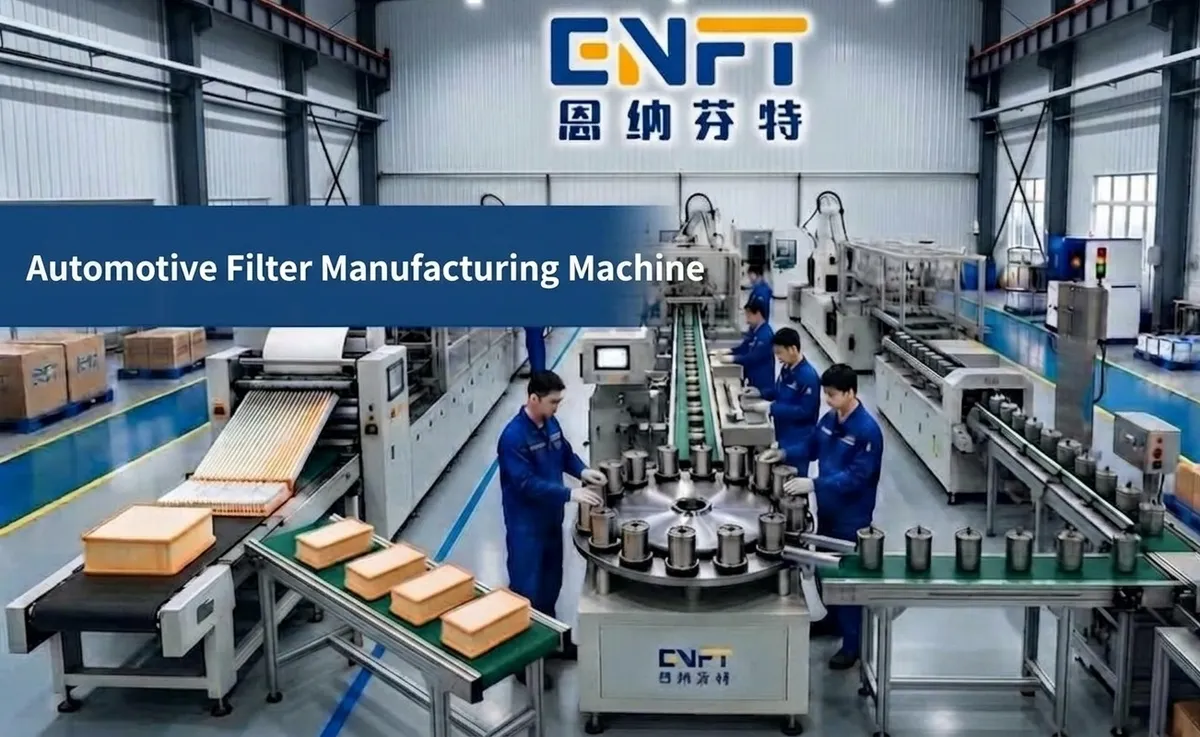
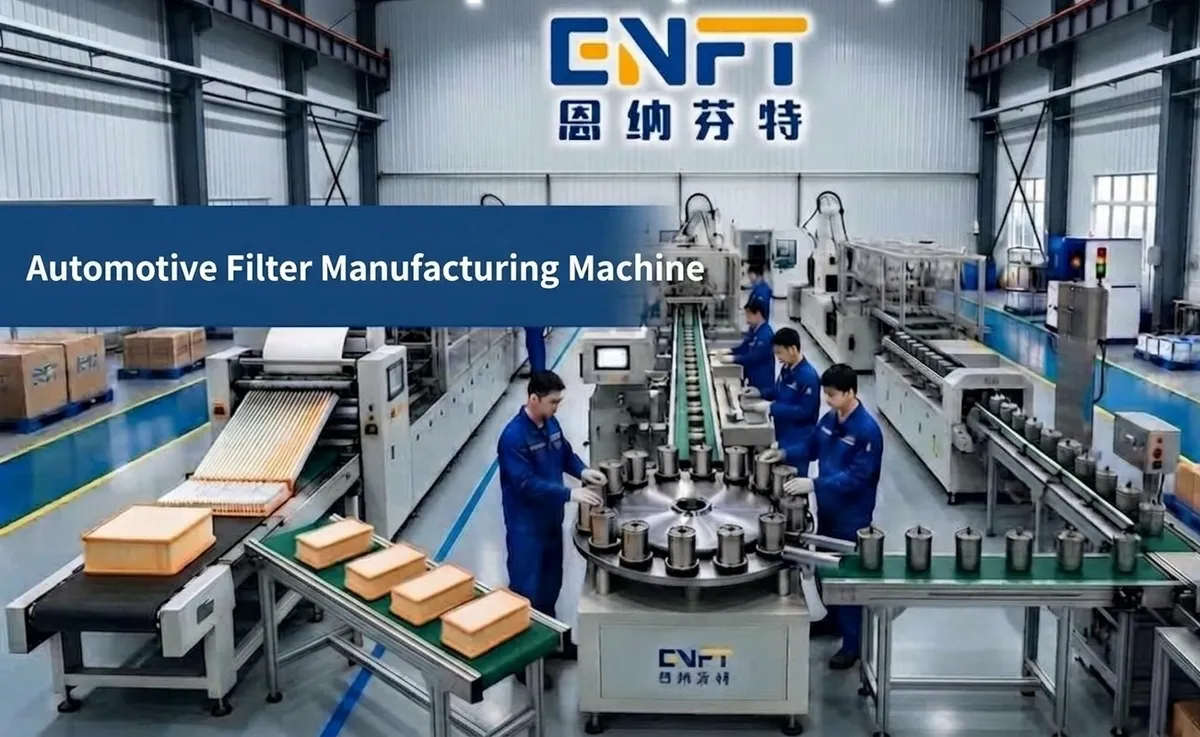
Automotive filter manufacturing machines are essential industrial equipment for investors who want to establish a factory producing air, oil, and fuel filters, or upgrade an existing factory to increase production and improve product quality. The success of the project depends on selecting the right machines for the filter type, target production capacity, automation level, raw material quality, and accuracy of quality testing.
Automotive filter manufacturing is not limited to a single machine. It may require a range of equipment, including filter paper pleating machines, cutting, gluing, and assembly machines, equipment for forming metal components or polyurethane frames, leak-testing devices, and printing and packaging equipment. The production line configuration varies according to the type of filter the factory intends to manufacture.
If you are planning to invest in this industry, this guide will help you understand the types of automotive filter manufacturing machines, production stages, raw materials, quality requirements, factory setup costs, and factors affecting profitability. It will also explain how to select suitable equipment from ENFT.
What Is an Automotive Filter Manufacturing Machine, and How Does It Work?
An automotive filter manufacturing machine is industrial equipment used to perform one or more stages of filter production, from preparing, pleating, and cutting the filtration media to assembling the filter components, closing the filter, inspecting it, and packaging the finished product.
The machine's function depends on the final product. Car air filter manufacturing equipment focuses on preparing and shaping the filtration paper and installing the frame, while manufacturing many types of oil filters requires additional equipment for preparing the metal housing, assembling components, sealing the housing, and performing leak tests.
How Does a Filter Manufacturing Machine Work?
The manufacturing process generally involves the following stages, although the details vary according to the filter design:
Raw Material Preparation: Inspecting the filter paper, metal or plastic components, and adhesives.
Filtration Media Forming: Feeding the paper through a pleating machine to create uniform pleats that increase the available filtration area.
Cutting and Preparation: Cutting the filtration media to the dimensions required for the product.
Fixing and Assembly: Securing the paper and assembling it with other components using adhesives, pressure, or suitable assembly methods.
Frame or Housing Forming: Using specialized equipment to form the filter frame or housing according to the product type.
Closing and Inspection: Checking assembly integrity, sealing, and dimensions.
Packaging and Labeling: Printing product information and the model number, then packaging the product for storage or distribution.
Not all these functions are performed by a single machine. Each stage may be handled by a separate machine or workstation within an integrated production line.
What Is the Difference Between a Standalone Machine and an Integrated Production Line?
Comparison Aspect | Standalone Machine | Integrated Production Line |
|---|---|---|
Function | Performs a specific manufacturing stage | Performs several consecutive stages |
Initial Investment | May be lower when purchasing a single machine | Depends on the number of machines and automation level |
Flexibility | Suitable for upgrading an existing stage or starting limited production | Suitable for organizing production stages within an integrated system |
Labor | Depends on the process and other equipment | Manual intervention may be reduced depending on automation |
Expansion | Additional machines can be added when needed | The line can be designed for expansion according to its capabilities |
Best Suited For | An existing factory or a project starting with a specific stage | A factory seeking integrated production based on a clear plan |
Choosing the right solution depends on the target products, demand volume, and budget—not simply on the number of machines.
What Types of Automotive Filter Manufacturing Machines Are Available?
Automotive filter manufacturing machines vary according to their functions and the type of filter being produced. Therefore, a factory should identify its target products before purchasing equipment, because an air filter production line is not necessarily the same as an oil filter production line.
Machine Type | Main Function | Application |
|---|---|---|
Filter Paper Pleating Machine | Forms uniform pleats in filter paper | Air filters, oil filters, and other types according to specifications |
Filter Paper Cutting Machine | Cuts paper to the required dimensions | Preparing the filtration media |
Filter Paper Gluing Machine | Secures the edges or sections of the paper | Prevents parts from separating during use |
Polyurethane Injection Machine | Forms the frame or edges from polyurethane | Specific types of air filters |
Metal Cover Forming Machine | Forms metal housing components | Metal oil filters and some other filter types |
Central Tube Manufacturing Machine | Forms the perforated support tube | Some types of oil filters |
Filter Assembly Machine | Assembles components into one unit | Depending on the filter design |
Pressing or Closing Machine | Secures components or closes the housing | Filter types that require this process |
Leak Testing Machine | Checks sealing integrity according to the test method | Especially filters with sealed housings or connections |
Printing Machine | Prints product information or codes | Product identification |
Packaging Machine | Prepares the finished product for storage and distribution | All production lines, as required |
What Machines Are Required to Manufacture Automotive Air Filters?
An air filter production line typically requires equipment for preparing, pleating, and cutting the filtration paper, followed by installing the frame or edges, assembling the product, inspecting it, and packaging it. Some designs may require a polyurethane injection machine and specialized molds.
Potential equipment includes:
Filter paper pleating machine.
Pleated paper cutting machine.
Paper gluing or fixing machine.
Polyurethane injection machine, when polyurethane is used for the frame.
Molds and assembly equipment suitable for the filter design.
Inspection and packaging equipment.
What Machines Are Required to Manufacture Automotive Oil Filters?
Manufacturing oil filters, particularly the metal spin-on type, requires additional processes for forming metal components, assembling the filtration element, closing the housing, and testing the seal.
The production line may require:
Filter paper pleating machine.
Central tube manufacturing machine, depending on the product design.
Metal cover and housing forming equipment.
Cover installation and component assembly equipment.
Pressing or closing machine.
Leak or pressure testing device, according to product specifications.
Printing and packaging equipment.
Cartridge oil filters may have a different design and production line from enclosed metal filters. Therefore, the product type must be specified before requesting a quotation.
How Does an Automotive Filter Production Line Work from Start to Finish?
An automotive filter production line is a group of machines and workstations that work together to transform raw materials into filters ready for inspection and packaging. The line is designed according to the filter type, dimensions, target production capacity, and required level of automation.
Stages of an Automotive Air Filter Production Line
Inspect the filter paper and other materials.
Pleat the paper according to the required number of pleats and dimensions.
Cut the pleated section to the specified size.
Prepare the frame or edges, including polyurethane injection if required by the design.
Assemble and secure the filter components.
Inspect the dimensions and assembly integrity.
Apply product information and package the finished product.
Stages of an Automotive Oil Filter Production Line
Inspect the filter paper, metal components, and auxiliary materials.
Pleat and prepare the filtration paper.
Prepare the central tube, covers, and other components according to the design.
Assemble the filtration element and secure its components.
Install the element inside the housing or prepare the cartridge filter according to its design.
Close and seal the required components.
Perform leak testing, pressure testing, and any other inspections required by the product specifications.
Print product information and package the finished product.
Comparison Between Air Filter and Oil Filter Production Lines
Comparison Factor | Air Filter Production Line | Oil Filter Production Line |
|---|---|---|
Filtration Media | Paper or filtration media suitable for the filter design | Filtration media compatible with oil and operating conditions |
Additional Components | Frame or fixing edges, which may be made from polyurethane | May include a metal housing, central tube, valves, and sealing components |
Specialized Equipment | Frame-forming and assembly equipment, depending on the design | Housing-forming, closing, and leak-testing equipment, depending on the design |
Important Tests | Dimensions, pleat quality, frame integrity, and filtration performance | Sealing integrity, pressure resistance, flow, and filtration efficiency according to specifications |
Design Variations | Multiple shapes and dimensions | Metal spin-on filters, cartridge filters, and other designs |
Example of Production Line Planning
Suppose a new factory wants to begin manufacturing air filters for specific car engine models and then expand into oil filters later. The factory could initially evaluate a dedicated air filter production line while preparing the facility and technical utilities to allow for future expansion.
However, it should not assume that adding a single machine will be sufficient to manufacture oil filters. Expansion may require different forming, assembly, and testing equipment, along with new molds and specifications.
What Raw Materials Are Required to Manufacture Automotive Filters?
Raw materials depend on the filter type, design, filtration requirements, and operating conditions. Material selection affects filtration efficiency, durability, sealing integrity, and the final product cost.
Raw Material | Potential Application | What Should Be Checked? |
|---|---|---|
Filter Paper | Captures particles in air or oil | Filtration efficiency, flow resistance, and durability |
Polyurethane | Forms the frame or edges of some air filters | Compatibility with the design, stability, and bond quality |
Metal Sheets | Manufacture of oil filter housings or covers | Thickness, formability, and corrosion resistance where needed |
Engineering Plastics | Components or covers in specific designs | Thermal and mechanical resistance and suitability for the application |
Adhesives | Secure paper and components | Bond strength and compatibility with the media and operating conditions |
Rubber and Sealing Materials | Prevent leaks at joints and covers | Flexibility, chemical compatibility, and resistance to operating conditions |
Tubes and Metal Components | Support the filtration element in some oil filters | Dimensions, durability, and oil flow rate |
Valves and Springs | Perform specific functions in some oil filters | Compliance with the design and operating requirements |
Packaging Materials | Protect the product during transportation and storage | Durability and clarity of product information |
How Do You Choose the Right Raw Materials?
Identify the filter type and its intended application.
Review the technical specifications and filtration requirements.
Verify that the materials are compatible with air or oil and the operating conditions.
Test samples before approving a supplier for large-volume purchases.
Monitor material quality consistency across shipments.
Calculate material costs while accounting for waste from cutting, pleating, and assembly—not just the purchase price.
No single raw material is suitable for every filter. The correct choice depends on the product design and the specifications it must meet.
How Do You Ensure the Quality of Automotive Filters After Manufacturing?
Filter quality begins with the design and materials used and continues through production control and final inspection. A filter looking good on the outside is not enough; it must meet the performance requirements appropriate to its type and application.
Key Quality Control Stages
1. Raw Material Inspection
Verify that the filter paper, metal components, adhesives, and other materials comply with approved specifications. Maintain supplier records and inspection results.
2. Filter Paper Pleat Inspection
The pleats must be uniform according to the design. Pay attention to dimensions, pleat count, cutting quality, and the absence of tears or visible defects.
3. Assembly and Bonding Inspection
Check that components are securely fixed and that there are no gaps or separation in bonded or sealed areas.
4. Dimensional Inspection
Use appropriate measuring tools to verify that the product meets the required dimensions and fits in its intended position.
5. Performance Testing
Tests are determined by the filter type and its specifications. They may include filtration efficiency, air or oil flow resistance, element durability, and pressure or leak testing where applicable.
6. Final Inspection and Documentation
Inspect the finished product, record the results, establish procedures for handling nonconforming products, and maintain production batch traceability.
Which Tests Distinguish Air Filters from Oil Filters?
Test | Air Filter | Oil Filter |
|---|---|---|
Dimensions and Assembly Quality | Essential | Essential |
Bonding and Sealing Integrity | Important to prevent air from bypassing the filtration media | Important to prevent leaks or oil from bypassing the filtration element |
Filtration Efficiency | According to application requirements | According to application requirements |
Flow Resistance | Airflow resistance | Oil flow resistance |
Pressure or Leak Testing | According to the product design and applicable requirements | Important for filters requiring sealing integrity and pressure resistance |
Material Inspection | Verifies suitability for the intended application | Verifies compatibility with oil and operating conditions |
Acceptance criteria should be established according to product specifications and the technical standards appropriate to the target market, rather than applying one value to all filter types.
Setting Up an Automotive Filter Factory: What Do You Need?
Establishing an automotive filter factory requires a plan that combines market research, product selection, machine specification, facility preparation, raw material sourcing, and the development of quality and operating systems.
1. Research the Market and Identify Target Products
Determine the types of filters you want to manufacture, the car models you intend to target, and your potential customers, such as spare parts distributors, wholesalers, maintenance centers, and equipment manufacturers, depending on the market.
Do not purchase machines before verifying that potential demand exists for the products you plan to manufacture.
2. Determine Production Capacity
Define the required daily or monthly output while considering working hours, model changes, machine setup time, expected downtime, waste rates, and rejected products.
3. Select Machines and Molds
Ask the supplier to identify the equipment required for each filter type, the dimensions supported, expected actual operating speed, required molds, and labor and maintenance requirements.
4. Prepare the Factory
The factory space should accommodate the production line, raw material and finished product storage areas, inspection, packaging, material movement, safety requirements, and electrical and pneumatic utilities where applicable.
There is no single facility size suitable for every filter factory. Space requirements vary according to the production line type, equipment layout, storage volume, and production capacity.
5. Provide Labor and Training
Staffing needs vary according to the level of automation. A factory may need machine operators, maintenance technicians, a quality control officer, assembly and packaging workers, and personnel responsible for purchasing, inventory, and sales.
6. Establish a Quality and Operating System
Create written procedures for raw material inspection, machine operation, preventive maintenance, production monitoring, finished product inspection, and documenting and correcting defects.
7. Plan for Licensing, Supply, and Distribution
Verify the requirements for factory establishment, operation, safety, environmental compliance, and technical conformity in the country where the project will operate. Suppliers of raw materials and product distribution channels should also be evaluated before commercial production begins.
A Quick Checklist Before Establishing the Factory
Identify the filter types and models to be manufactured.
Research demand, competitors, and expected selling prices.
Determine the target production capacity.
Select suitable machines and molds.
Prepare a facility layout and plan the technical utilities.
Calculate raw material, labor, and operating costs.
Develop a quality control and maintenance plan.
Identify sales and distribution channels.
Verify relevant licenses and technical requirements.
How Do You Choose the Right Automotive Filter Manufacturing Machine for Your Factory?
Choosing an automotive filter manufacturing machine is an investment decision that affects product quality, productivity, and operating costs. Therefore, do not make the purchase price your only consideration. Compare specifications, production capacity, flexibility, maintenance requirements, and technical support.
Key Technical Criteria When Purchasing a Machine
Filter Type: Make sure the machine is designed to manufacture the required type of filter, whether an air, oil, fuel, or cabin filter.
Production Capacity: Ask for the expected output under actual operating conditions and identify the product used to measure the machine's speed.
Size Range: Check the dimensions supported by the machine and whether changing product models requires additional molds or equipment.
Automation Level: Compare manual, semi-automatic, and fully automatic machines in terms of investment, labor, productivity, and maintenance requirements.
Accuracy and Quality Consistency: Ask about the systems used to control dimensions, pleats, bonding, and sealing, as well as the inspections that can be integrated into the line.
Power Consumption and Utilities: Check electrical and compressed-air requirements, space, ventilation, and any other equipment needed for operation.
Maintenance and Spare Parts: Ask about the maintenance plan, spare parts availability, delivery lead times, training, and technical support.
Scalability: Check whether additional stations or machines can be added in the future and whether they will be compatible with the existing line.
Comparison of Automation Levels
Criterion | Manual | Semi-Automatic | Fully Automatic |
|---|---|---|---|
Initial Investment | Usually lower | Relatively moderate | Usually higher |
Labor Requirements | Higher | Moderate | Lower for automated processes |
Production Speed | Depends on the process and labor | Higher at specific stages | May be higher when the line is properly balanced |
Consistency of Results | Affected by operator skill | Depends on task distribution and machine settings | May be more consistent with proper adjustment |
Flexibility | Suitable for some simple operations | Good for many applications | Depends on line design and mold changeover |
Best Suited For | Limited production or simple operations | Projects seeking a balance between investment and automation | High-volume, repetitive production when sufficient demand exists |
A higher level of automation is not always the best choice. Purchasing a line that exceeds market requirements may increase financial burdens, even if its production speed is high.
Questions to Ask the Supplier Before Purchasing a Machine
What types of filters can the machine manufacture?
What dimensions does it support?
What is the expected output for each model?
What raw materials and specifications are required?
Does the quotation include molds, installation, and trial operation?
Is training available for operators and maintenance technicians?
What are the warranty terms, and how readily are spare parts available?
What are the electrical, compressed-air, and space requirements?
Can you see an actual machine test using materials and dimensions similar to your factory's requirements?
How Much Does an Automotive Filter Manufacturing Machine Cost?
There is no single price for an automotive filter manufacturing machine without knowing the filter type, specifications, production capacity, automation level, and scope of supply. The price of a standalone paper pleating machine may differ significantly from the cost of an integrated production line that includes component forming, assembly, testing, and packaging.
Therefore, it is preferable to request a customized quotation that specifies the technical details, scope of supply, and additional services rather than comparing total prices without knowing what each offer includes.
What Factors Determine the Machine Price?
Factor | Effect on Cost |
|---|---|
Filter Type | Air filter equipment differs from oil filter equipment |
Production Capacity | Higher speeds may require different equipment and control systems |
Automation Level | Affects components, controls, and labor requirements |
Size Range | May require additional molds and equipment |
Number of Machines | Determines how complete the production line will be |
Inspection Systems | Testing and measurement equipment add to the project scope |
Installation and Training | May be included in the quotation or charged separately |
Shipping and Setup | Depend on the country of supply, location, and installation requirements |
Maintenance and Spare Parts | Affect long-term operating costs |
How Do You Calculate the Total Project Cost?
The total cost is not limited to the price of the machines. The budget should include:
Purchasing machines and molds.
Preparing the facility and electrical and pneumatic utilities.
Shipping, installation, and trial operation, where required.
Raw materials and initial operating inventory.
Labor and training.
Maintenance and spare parts.
Quality testing and packaging.
Administrative expenses, licensing, marketing, and distribution.
Working capital needed to cover expenses before sales revenue is collected.
Hypothetical Calculation Example: If the total initial setup and operating costs of a project amount to 1,000,000 currency units, this does not mean that the machines alone cost the same amount. The budget must be allocated among equipment, factory preparation, inventory, operations, and working capital. This figure is hypothetical and is provided to explain the planning method; it is not an actual price for ENFT machines or an estimate for a specific factory.
For a comparable estimate, provide the supplier with the filter type, dimensions, target production capacity, automation level, and project country. Request a quotation that separates equipment prices from services and additional setup costs.
Is Automotive Filter Manufacturing a Profitable Business?
Automotive filter manufacturing can be a viable industrial opportunity when sufficient demand exists and production costs, quality, and distribution are aligned with the prices the market is willing to pay. However, purchasing machines alone does not guarantee profitability. Viability depends on actual sales volume, raw material costs, operating efficiency, competition, payment collection, and inventory management.
What Factors Affect the Profitability of a Filter Factory?
Product Demand: The number of potential customers and the consistency of their purchases.
Unit Cost: Raw materials, labor, energy, waste, and packaging.
Product Quality: The ability to meet required specifications and reduce returns.
Production Capacity Utilization: Operating equipment at a level aligned with actual demand.
Distribution Channels: Reaching wholesalers, distributors, and target customers.
Competition: Prices, quality, and the availability of alternative products.
Working Capital: The ability to purchase raw materials, finance operations, and cover payment collection periods.
How Do You Calculate Filter Manufacturing Profitability?
The following formulas can be used in a feasibility study:
Unit Contribution Margin = Net Selling Price per Unit − Variable Cost per Unit
Break-Even Point in Units = Fixed Costs for the Period ÷ Unit Contribution Margin
Fixed costs are expenses that do not change directly with the number of units produced during the period under review, such as certain rent and administrative expenses. Variable costs are associated with producing each unit, including raw materials, packaging, and some operating costs.
Hypothetical Example of Calculating the Break-Even Point
Suppose a factory sells a filter at a net price of 20 currency units, the variable cost per filter is 12 currency units, and monthly fixed costs total 80,000 currency units.
Unit contribution margin = 20 − 12 = 8 currency units.
Break-even point = 80,000 ÷ 8 = 10,000 filters per month.
This means the factory needs to sell 10,000 filters per month to cover its fixed and variable costs under these assumptions. This example is not a profit forecast for an actual factory; real market and cost data must be entered before making an investment decision.
How Can You Improve Project Profitability?
Choose products for which demand can be verified.
Reduce filter paper and raw material waste by optimizing cutting and machine operation.
Monitor rejected product rates and rework costs.
Maintain consistent quality to reduce returns and complaints.
Balance production capacity with actual sales.
Negotiate with raw material suppliers without compromising specifications.
Regularly monitor unit costs, payment collection, and inventory.
The phrase “best types of oil filters” does not refer to one type that is suitable for every vehicle. Selection depends on compatibility with the engine, manufacturer specifications, filtration efficiency, flow resistance, and manufacturing quality. For a factory, producing in-demand filters that meet defined specifications is more important than claiming a product is “the best” without supporting tests and data.
Why Choose ENFT to Equip Your Automotive Filter Factory?
ENFT specializes in equipment for manufacturing air, oil, and automotive filters. Its equipment and production line solutions help meet factory requirements according to the product type and required production capacity. Selecting the right solution begins by identifying the target filters, dimensions, and technical specifications, then choosing machines that perform the required production stages.
How Can ENFT Help You?
Selecting Suitable Equipment: Identifying machines according to the type of filter you want to manufacture.
Production Line Planning: Organizing manufacturing stages from filtration media preparation through assembly, inspection, and packaging.
Defining Specifications: Reviewing production capacity, dimensions, and operating requirements before purchase.
Supporting Expansion: Evaluating the possibility of adding more equipment when demand increases or the product range expands.
Planning Your Project Carefully: Comparing alternatives according to budget, production capacity, and factory requirements.
What Information Does ENFT Need to Provide a Suitable Quotation?
To obtain an accurate quotation, prepare the following information:
Information | Example of What to Specify |
|---|---|
Product Type | Air filter, oil filter, or more than one type |
Filter Models | Target dimensions and designs |
Production Capacity | Number of units required per hour, day, or month |
Automation Level | Manual, semi-automatic, or automatic, according to project needs |
Equipment Scope | A standalone machine or an integrated production line |
Factory Country | To determine shipping, installation, and service requirements |
Budget | Available investment range for equipment and project setup |
Expansion Plan | Potential future products or production capacity |
The clearer this information is, the easier it becomes to compare technical and commercial solutions and select machines that fit your project rather than purchasing equipment that does not meet your production needs.
Start Your Automotive Filter Manufacturing Project with ENFT
Are you planning to establish a new factory or upgrade an existing production line? Choose an automotive filter manufacturing machine based on your actual needs, not price alone. The right equipment must match the filter type, required dimensions, production capacity, budget, and expansion plan.
Contact ENFT to request a customized quotation for air, oil, and automotive filter manufacturing equipment. Share details about the products you intend to manufacture, your required production capacity, and the country where the project will be located to get a clearer picture of the suitable machines and production line.
Start with your factory's needs and choose equipment that helps you build a scalable manufacturing process.