
Air Conditioning Filter Manufacturing Machine: A Comprehensive Guide to Machinery, Filter Types, and Factory Setup
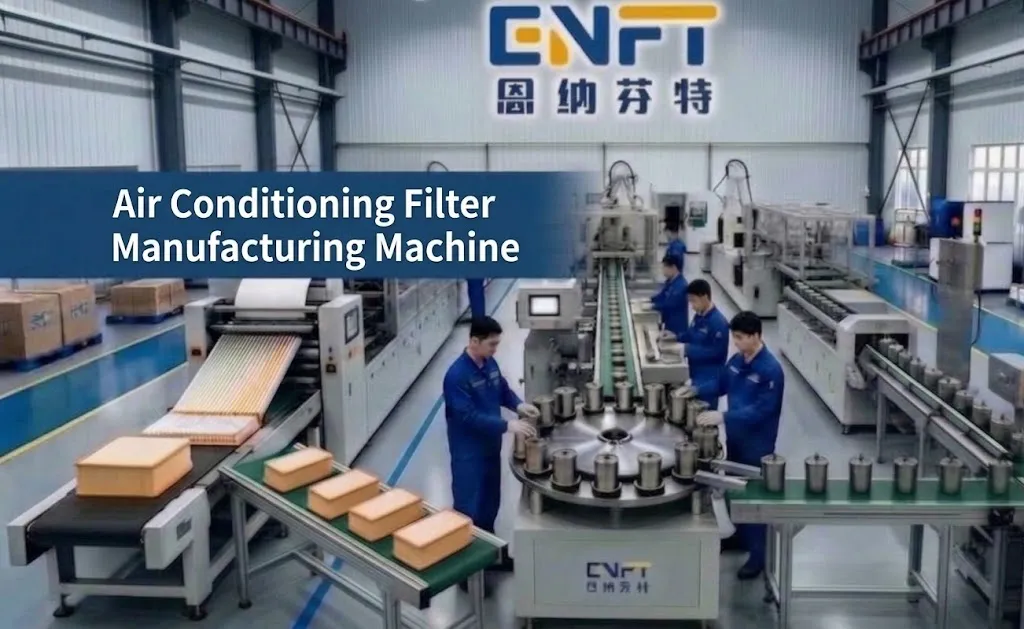
An air conditioning filter manufacturing machine is essential equipment for factories that aim to produce air filters used in air conditioning and ventilation systems, whether in residential and commercial buildings or industrial facilities. These machines perform various operations, including cutting filtration media, pleating it, assembling it inside frames, and securing components according to the filter design and performance requirements.
Choosing the right air conditioning filter manufacturing machine depends on the target filter types, required dimensions, filtration efficiency level, production capacity, and degree of automation. Equipment used to manufacture standard air conditioning filters may differ from the machinery required to produce high-efficiency HEPA filters or large filters used in central air conditioning systems.
In this guide, you will learn about the types of air conditioning filters that can be manufactured, the machines used in their production, the components of filter manufacturing machines, operating procedures, requirements for establishing a specialized factory, and how to choose the right equipment and supplier. We will also explain the role of ENFT in the field of machinery for manufacturing air filters, oil filters, and automotive filters.
What Is an Air Conditioning Filter Manufacturing Machine?
An air conditioning filter manufacturing machine is an industrial machine used to perform one or more stages in the production of air filters designed for air conditioning and ventilation systems. It may be a specialized machine for cutting or pleating filtration media, equipment for assembling filters and securing their components, or a production line that connects several operations within one integrated system.
The specifications of an air conditioning filter manufacturing machine vary according to the filter type. Producing a simple flat filter may require cutting and assembly equipment, while manufacturing pleated filters requires precise control over pleat height and spacing. High-efficiency filters may require specialized equipment for handling the filtration media, assembling the filter, and conducting final performance tests.
What Functions Does an Air Conditioning Filter Manufacturing Machine Perform?
The main functions performed by filter manufacturing equipment may include:
Filtration media cutting: Preparing paper or fibers to the required dimensions.
Filtration media pleating: Forming uniform pleats according to the filter design.
Frame preparation: Preparing metal, plastic, or other components, depending on the scope of manufacturing.
Adhesive dispensing: Securing components when adhesive bonding is used.
Filter assembly: Installing the filtration media inside the frame or housing.
Product trimming: Removing excess material and adjusting the final dimensions.
Quality inspection: Verifying dimensions, sealing integrity, and performance against the target specifications.
What Is the Difference Between an Air Conditioning Filter Manufacturing Machine and a Complete Production Line?
Comparison Factor | Individual Manufacturing Machine | Complete Production Line |
|---|---|---|
Scope of Work | Performs a specific operation | Performs several interconnected stages |
Investment | Usually lower when purchasing a single machine | Generally higher, depending on the number of machines |
Productivity | Depends on the speed of the operation performed | Depends on the balance and performance of all stages |
Flexibility | Suitable for upgrading a specific stage or completing an existing line | Suitable for factories that require an organized production flow |
Application | Gradual expansion or production of a specific component | Establishing a factory or developing an integrated manufacturing process |
Practical example: If you already own a filter paper pleating machine but assemble filters manually, limiting production, investing in assembly equipment may be the most suitable option. However, if you are establishing a new factory, it is better to evaluate all manufacturing stages to determine whether you need an individual machine or a complete production line.
What Types of Air Conditioning Filters Can Be Manufactured?
Air conditioning filters vary according to their application, required filtration efficiency, air characteristics, and ventilation system design. The filter type directly affects the choice of manufacturing machine, raw materials, and assembly method.
Filter Type | Common Application | Manufacturing Requirements |
|---|---|---|
Flat air conditioning filters | Certain ventilation and air conditioning systems | Cutting and preparing the media and securing it inside a frame |
Pleated air conditioning filters | Various air conditioning and ventilation systems | Uniform pleating and assembly that maintains pleat shape |
Metal-frame air filters | Applications requiring a suitable metal structure | Frame preparation and secure installation of the filtration media |
Plastic-frame air filters | Applications suited to plastic properties | Dimensional control and assembly of the frame and filtration media |
Pocket filters | Certain commercial and industrial ventilation systems | Forming the pockets and assembling them inside a suitable frame |
HEPA filters | Applications requiring high particle removal efficiency | Precise manufacturing and assembly processes, along with appropriate performance testing |
Primary air filters | The initial stage of multistage filtration systems | Selecting suitable filtration media and assembling it for the intended application |
Not all these products require the same machinery. Some filters use flat media, while others require more complex pleating, forming, or assembly processes.
How Do You Choose the Filter Type You Will Manufacture?
Before purchasing an air conditioning filter manufacturing machine, identify the following:
Your target market, such as commercial buildings, factories, or ventilation systems.
The filter types requested by your customers.
The required dimensions and shapes.
The target filtration efficiency level.
The available raw materials and their specifications.
The tests required to verify product quality.
Defining this information helps you avoid purchasing equipment that is incompatible with the products you plan to manufacture.
What Types of Air Conditioning Filter Manufacturing Machines Are Available?
Several types of air conditioning filter manufacturing machines are available, and each performs a specific function in the production process. The configuration of the manufacturing line depends on whether the factory will purchase components ready-made or manufacture them in-house.
1. Filtration Media Cutting Machine
This machine cuts filter paper or fibers to the required dimensions. Cutting accuracy affects assembly efficiency and material waste, particularly when producing filters in multiple sizes.
2. Filter Paper Pleating Machine
This machine forms uniform pleats in the filtration media. Its specifications vary according to the material type, width, thickness, and required pleat height.
It is important to ensure that the machine supports the range of dimensions and materials required for your target product and that changing its settings does not cause lengthy production downtime.
3. Filter Assembly Machine
This machine installs the filtration media inside the frame or connects different filter components. Depending on the filter type, it may use mechanical fastening methods, adhesives, or specialized assembly designs.
4. Adhesive Dispensing Machine
This machine applies adhesive to specific locations in appropriate quantities. Consistent dispensing helps reduce defects caused by insufficient bonding or excessive adhesive application.
5. Frame Manufacturing Equipment
If the factory will manufacture frames in-house, it may require equipment for metal forming, plastic processing, cutting, punching, and finishing operations. The type of equipment depends on the frame material and design.
6. Inspection and Testing Equipment
This equipment verifies whether filters meet the required specifications. Depending on the product type and target quality standards, it may include dimensional measuring tools and equipment for testing leakage, airflow resistance, or filtration efficiency.
Comparison of Filter Manufacturing Machine Types
Machine Type | Production Stage | Main Selection Criterion |
|---|---|---|
Cutting machine | Raw material preparation | Dimensional accuracy and waste reduction |
Pleating machine | Filtration media forming | Pleat uniformity and material compatibility |
Assembly machine | Component installation | Accurate fastening and consistent quality |
Adhesive dispensing machine | Component bonding | Consistent application and adhesive compatibility |
Frame forming equipment | Component manufacturing | Compatibility between the material, mold, and design |
Testing equipment | Quality control | Suitability of the test for the product specifications |
Tip: Do not purchase every machine simply because it is used in other factories. First, identify the manufacturing stages that must be performed in-house, then select equipment that directly supports those operations.
Components of an Air Conditioning Filter Manufacturing Machine and Their Functions
The components of an air conditioning filter manufacturing machine vary according to its type and design. A pleating machine has different components from an adhesive dispensing machine or assembly equipment. However, many industrial machines share several common components.
Component | Function |
|---|---|
Main frame | Supports the machine and maintains stability during operation |
Feeding system | Moves raw materials into the processing area |
Guide units | Control the path of the paper or filtration media |
Cutting or pleating tools | Perform the machine's primary operation |
Motors and drive system | Operate mechanical components and control their movement |
Control panel | Adjusts settings and monitors operation according to the machine design |
Sensors | Monitor certain variables or detect specific conditions |
Safety systems | Reduce operating risks and protect operators |
Adjustment units | Modify selected dimensions and operating settings |
Why Should You Understand Machine Components Before Purchasing?
Understanding machine components helps you evaluate ease of operation, maintenance requirements, and suitability for your target production needs. It also helps you identify consumable parts that may need replacement, determine which spare parts should be available, and assess the level of training required for operators.
Before purchasing an air conditioning filter manufacturing machine, request the technical specifications and operation and maintenance manuals from the supplier. Verify the power requirements, space requirements, raw material specifications, and safety procedures as well.
How Does an Air Conditioning Filter Manufacturing Machine Work Step by Step?
Operating procedures vary depending on the machine type, but the filter manufacturing process can be understood through a general sequence that begins with raw material preparation and ends with final product inspection.
Step 1: Raw Material Preparation
Filtration media, frames, adhesives, and other components are inspected to ensure that they meet the product specifications. The width, thickness, and condition of the media should be checked before it is fed into the machine.
Step 2: Adjusting the Machine Settings
Settings are determined according to the product type, including material width, cutting length, pleat height, and operating speed. The machine's operating instructions must be followed, and settings unsuitable for the raw material must be avoided.
Step 3: Feeding the Filtration Media
The paper or filtration media is passed through the feeding and guiding unit. The material path must remain straight, without wrinkles or misalignment that could affect processing quality.
Step 4: Cutting or Pleating
The machine performs its designated operation. A cutting machine prepares the material to the required dimensions, while a pleating machine forms pleats according to the specified settings.
Step 5: Filter Assembly
The filtration media is secured inside the frame, and supporting components or gaskets are added when required. If adhesives are used, the specified application method and curing time must be followed.
Step 6: Product Inspection
The dimensions, pleat shape, assembly integrity, and sealing are inspected. Appropriate performance tests should be conducted for the filter type rather than relying exclusively on visual inspection when the specifications require technical testing.
Step 7: Packaging and Storage
After the product has been verified as compliant, it is packaged to protect it from dust, moisture, and deformation during storage and transportation.
Illustrative Practical Example
Suppose a factory wants to manufacture a pleated air conditioning filter with a plastic frame. The process may begin with cutting the filtration media, followed by pleating it, preparing it for the frame, securing it using an appropriate assembly method, and finally inspecting its dimensions and fastening quality.
This is an illustrative example. The actual production stages and required equipment may vary according to the filter design and raw materials.
Central Air Conditioning Filter Manufacturing Machine
Central air conditioning filters are used in HVAC systems serving commercial and administrative buildings, hotels, hospitals, industrial facilities, and other locations. Filters used in these systems vary in dimensions, design, and filtration efficiency. Therefore, the manufacturing machine must be selected according to the intended product type.
Products may include pre-filters, pleated filters, pocket filters, and other types designed for different stages of air purification. However, this does not mean that one machine can manufacture all these types, as some require different forming and assembly operations.
What Are the Main Requirements for Manufacturing Central Air Conditioning Filters?
Determine the range of filter dimensions to be manufactured.
Select suitable filtration media for each application.
Identify the frame type, whether metal, plastic, or another material.
Select cutting, pleating, and assembly equipment according to the product design.
Determine how the filtration media will be secured inside the frame.
Prepare quality inspection and performance testing methods.
Verify that the equipment can handle the required product sizes.
Comparison Between Manufacturing Small Filters and Large Filters
Comparison Factor | Small Filters | Large Central Air Conditioning Filters |
|---|---|---|
Dimensions | Generally smaller | Larger and may require more workspace |
Handling | Easier in many cases | May require additional handling equipment |
Structure | Determined by the application | May require additional support depending on the design |
Equipment | May use compact equipment | May require equipment that supports larger dimensions |
Testing | Based on product specifications | Must account for filter size and system requirements |
When selecting a central air conditioning filter manufacturing machine, do not base your decision solely on its ability to manufacture one filter. Verify the supported size range, ease of changing settings, assembly accuracy, testing requirements, and actual production rate.
HEPA Filter Manufacturing Machines and High-Efficiency Air Filters
HEPA filters are used in applications requiring a high level of airborne particle removal in accordance with specific requirements and standards. Manufacturing these filters differs from producing some conventional air conditioning filters because filtration media quality, assembly methods, and final product testing are critical to achieving the required performance.
A machine's ability to pleat filtration media is not sufficient on its own to manufacture a HEPA filter that meets the required specifications. Every manufacturing stage must be suitable for the media type and filter design, and appropriate testing methods must be available to verify performance.
What Equipment May Be Required for HEPA Filter Manufacturing?
Depending on the product design, a factory may require:
Precision equipment for preparing filtration media.
A pleating machine compatible with the media properties and required pleat height.
Equipment for securing pleats or maintaining spacing between them when necessary.
Assembly equipment suitable for the frame and filtration media.
Adhesive dispensing systems or component fastening equipment.
Testing equipment or testing services to verify filtration efficiency and leakage according to the target standard.
What Is the Difference Between Manufacturing a Standard Air Conditioning Filter and a HEPA Filter?
Comparison Factor | Conventional Air Conditioning Filter | HEPA Filter |
|---|---|---|
Filtration requirements | Vary according to the application | Require a specified performance level under an applicable standard |
Filtration media | Depends on the filter category | Requires media suitable for HEPA requirements |
Assembly | Determined by the design | Requires particular care to prevent leakage paths |
Inspection | Based on the target specifications | Requires suitable tests to demonstrate the required performance |
Equipment selection | Based on filter type and production volume | Must account for media properties, manufacturing precision, and testing requirements |
If you plan to manufacture HEPA filters, identify the standard your products must meet before selecting the machinery. Verify that the manufacturing and testing processes can demonstrate compliance. A product should not be marketed as HEPA solely because of its appearance or the type of filtration media used; its required performance must be verified.
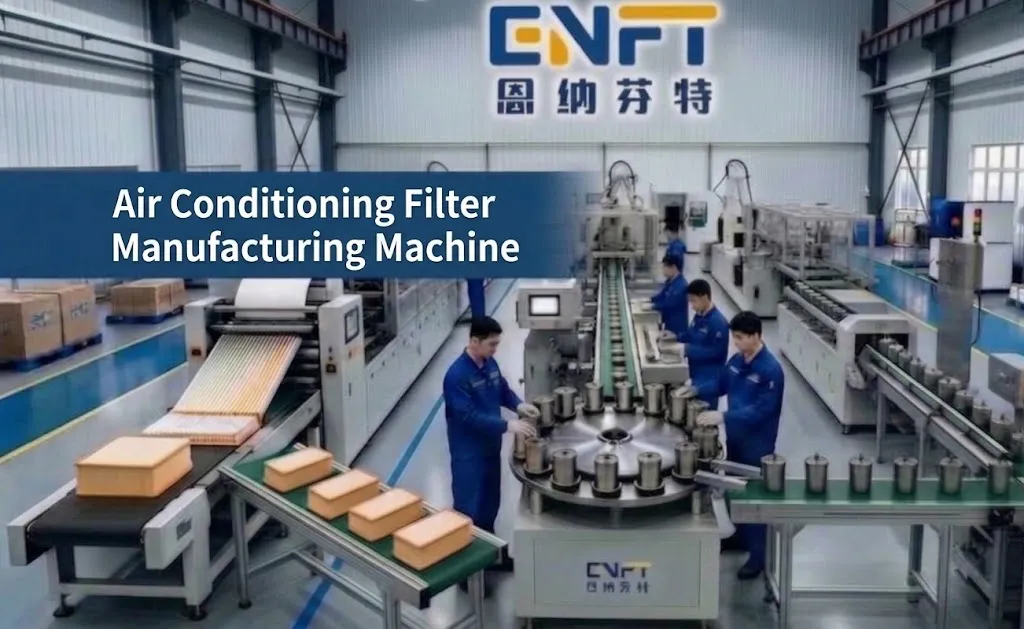
Setting Up an Air Conditioning Filter Factory Using Filter Manufacturing Machines
Establishing an air conditioning filter factory requires planning for the market, equipment, raw materials, labor, quality control, and operating costs. One of the most important initial decisions is whether to manufacture a single filter type or several types, and whether to produce components in-house or purchase some of them ready-made.
Step 1: Conduct Market Research
Identify potential customers, such as HVAC companies, maintenance supply providers, air conditioning unit manufacturers, and distributors. Then research the types of filters in demand, common dimensions, competitors, and customer requirements.
Step 2: Define Your Products
Select the products you will manufacture initially, such as flat filters, pleated filters, or certain central air conditioning filters. Ideally, this decision should reflect expected demand, technical capabilities, and the available budget.
Step 3: Select the Equipment
Identify the machines required at each stage, from media preparation to assembly and inspection. Compare purchasing a separate machine for each operation with investing in a more integrated production line, based on production volume and product characteristics.
Step 4: Select and Prepare the Facility
The facility must accommodate the machinery, raw material storage, and finished product storage. Electrical requirements, ventilation, safety, and material movement must also be considered.
Step 5: Secure Raw Materials
Find suppliers of filtration media, frames, adhesives, and other components. Compare them based on quality, specification consistency, delivery times, and cost.
Step 6: Develop a Quality Plan
Define product specifications and inspection procedures for raw materials and products during and after manufacturing. Testing methods should be selected according to the filter type and final application rather than applying one standardized procedure to every product.
Step 7: Calculate the Costs
The costs that should be evaluated include:
Cost Category | Examples |
|---|---|
Equipment | Machines, molds, and inspection tools |
Facility preparation | Site preparation, power, ventilation, and safety |
Raw materials | Filtration media, frames, and adhesives |
Operations | Labor, energy, maintenance, and spare parts |
Quality control | Measuring tools and required tests |
Packaging | Packaging materials, storage, and transportation |
Administration and marketing | Sales, distribution, and administrative expenses |
Working capital | Funding operating expenses until sales and collections stabilize |
An accurate estimate for establishing an air conditioning filter factory cannot be determined without knowing the production capacity, filter types, automation level, location, and scope of the required equipment.
Illustrative Financial Example
Suppose a project is comparing two options: purchasing only a pleating machine and buying ready-made frames, or establishing a production line with additional equipment to manufacture some components in-house. The comparison should include machinery prices, molds, labor, energy, maintenance, waste, and the cost of purchased components.
Purchasing ready-made components may be more suitable when production volumes are low or demand is unstable. In-house manufacturing may become a viable option when demand increases and becomes more consistent, provided that the calculated savings justify the additional investment and operating costs.
How Do You Choose the Right Air Conditioning Filter Manufacturing Machine?
Choosing an air conditioning filter manufacturing machine depends on the project's actual requirements, not just the price or operating speed. The machine must be compatible with the filter type, filtration media, dimensions, and target production capacity.
1. Identify the Target Filter Types
Determine whether you will manufacture flat filters, pleated filters, central air conditioning filters, or HEPA filters. Each type may have different requirements that affect machine design and operation.
2. Verify the Supported Size Range
Ask the supplier to specify the range of dimensions supported by the machine, including material width, pleat height, and finished product dimensions where applicable.
3. Compare Actual Production Capacity
Do not rely solely on nominal speed. Ask about the expected output for the product you intend to manufacture, changeover times, setup requirements, maintenance needs, and the impact of downtime on production.
4. Evaluate Manufacturing Quality
Verify cutting accuracy, pleat uniformity, assembly quality, and the equipment's ability to produce consistent, compliant products. When possible, request a trial using a sample of your product.
5. Calculate the Total Cost
Consider the purchase price, installation, training, energy, labor, maintenance, spare parts, molds, and raw materials.
6. Review Ease of Operation and Maintenance
Ensure that operating procedures are clear, technical documentation is available, maintenance components are accessible, and the necessary spare parts can be obtained.
7. Plan for Future Expansion
If you expect to introduce additional products or increase production, verify whether settings can be adjusted or new equipment added without replacing the entire production line.
Pre-Purchase Comparison Table
Selection Criterion | What Should You Verify? |
|---|---|
Product compatibility | Support for the required filter type, materials, and dimensions |
Productivity | Actual production rate that matches your sales plan |
Manufacturing quality | Cutting, pleating, and assembly accuracy |
Flexibility | Ease of changing dimensions and product types |
Operation | Labor and training requirements |
Maintenance | Availability of spare parts and technical support |
Cost | Total investment and expected operating costs |
Practical tip: Prepare a list of specifications for your target filter before contacting machinery suppliers. The clearer your product details and production capacity requirements, the more accurately you can evaluate equipment and compare quotations.
How Do You Choose a Reliable Supplier of Air Conditioning Filter Manufacturing Machines?
Choosing the right supplier helps reduce investment risks and ensures that the equipment meets production requirements. Therefore, the purchasing decision should not be based on price alone. Technical specifications, supply terms, and available support must also be evaluated.
Key Criteria for Selecting a Supplier
Technical experience: Verify the supplier's experience with the type of equipment you need and its understanding of the products you intend to manufacture.
Clear specifications: Request documents specifying the supported materials and dimensions, production capacity, and facility and power requirements.
Equipment testing: Ask whether you can observe the machine in operation or test a sample of the filtration media and target product.
Technical support: Review warranty, maintenance, training, and spare parts arrangements, and ensure that these terms are clearly stated in the quotation or contract.
Transparent pricing: Confirm what the price includes, such as molds, installation, training, and transportation, and identify any items charged separately.
Compatibility with your project plan: Choose a supplier who can explain the available options based on your requirements rather than encouraging you to purchase equipment you do not need during the initial stage.
Questions to Ask the Supplier Before Signing a Contract
What types of filters can this machine manufacture?
What range of dimensions and materials does it support?
What actual production capacity can be expected?
What are the operating and maintenance requirements?
Is operator training available?
What are the warranty terms and spare parts arrangements?
Can a product sample be tested before purchase?
What additional equipment is required to operate the complete production line?
These questions help you evaluate suppliers practically and reduce the risk of purchasing a machine that is unsuitable for your product or factory operating conditions.
How Can ENFT Help You Choose the Right Machine?
ENFT operates in the field of machinery for manufacturing air filters, oil filters, and automotive filters. You can contact the company to discuss your project requirements and identify the equipment options that should be evaluated for your target filter types.
Air conditioning filter manufacturing requirements vary according to filter shape, filtration media, and assembly method. Therefore, it is important to define your product range and production capacity before determining the required machinery, while verifying that the proposed equipment is compatible with your product specifications.
What Information Should You Prepare Before Contacting ENFT?
Filter type: Flat filter, pleated filter, central air conditioning filter, or another type.
Product dimensions: Length, width, height, and pleat height when applicable.
Filtration media type: Paper, fibers, or another material suitable for the application.
Target production capacity: Number of units per hour or shift.
Manufacturing scope: A single machine or multiple production stages.
Automation level: Manual, semi-automatic, or automatic.
Quality requirements: The tests and specifications the product must meet.
Budget and facility space: To evaluate feasible technical options.
How Does Defining These Details Help?
When the product specifications are clear, it becomes easier to determine whether you need cutting, pleating, or assembly machinery and whether additional equipment is required to manufacture frames or conduct final testing.
This information also helps you compare machinery quotations based on production capacity, technical compatibility, total cost, and maintenance requirements.
Before making a purchasing decision, request detailed technical specifications and verify the supported product range, installation and training terms, warranty, and technical support. If you intend to manufacture HEPA filters or products with specialized performance requirements, ensure that the manufacturing and testing systems can meet the required standards.
Start Your Air Conditioning Filter Manufacturing Project with ENFT
Are you planning to establish a new factory or upgrade an existing production line? Start by identifying the filter types you want to manufacture and your target production capacity. Then choose an air conditioning filter manufacturing machine that matches your technical requirements and available budget.
Contact ENFT to discuss your air filter, oil filter, and automotive filter manufacturing project and explore machinery options suited to your production needs.
Prepare the filter dimensions, filtration media type, and target production volume before contacting the supplier. This will help you evaluate technical specifications and available options more accurately.