
Modern Industrial Machines: The Complete Guide to Choosing the Best Equipment for Higher Productivity and Maximum Efficiency
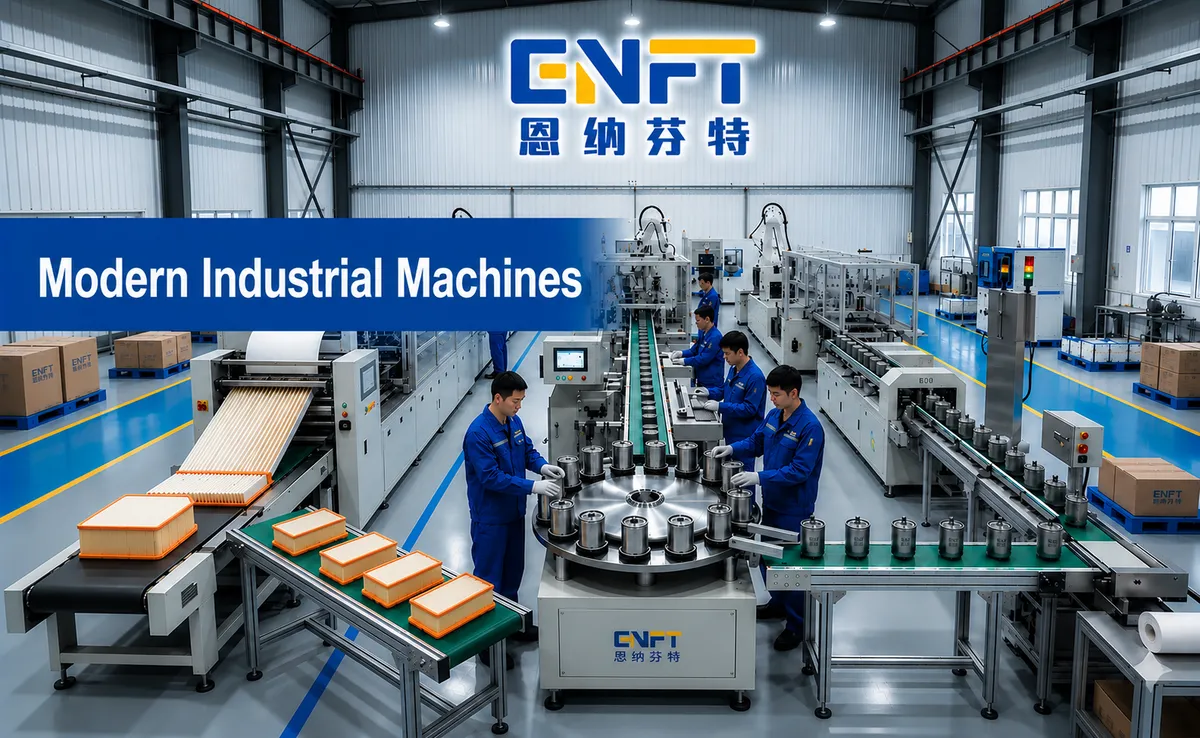
Modern industrial machines have become the backbone of any factory aiming to increase production, improve product quality, and reduce operating costs. With the rapid advancement of manufacturing technologies and industrial automation, relying on conventional equipment is no longer sufficient to compete in local and international markets. Investing in modern industrial machinery has become essential for manufacturers seeking sustainable growth and long-term competitiveness.
In specialized industries such as automotive filter manufacturing, automotive filter manufacturing machines play a vital role in producing high-quality filters with maximum operational efficiency. Whether establishing a new automotive filter manufacturing project or upgrading an existing production line, selecting the right machinery is a key success factor. Likewise, many air filter manufacturers rely on the latest industrial technologies to produce oil, air, and fuel filters that meet international quality standards.
What Are Modern Industrial Machines?
Modern industrial machines are manufacturing equipment that utilizes advanced technologies, intelligent control systems, and automation to perform industrial operations with greater speed, precision, and efficiency than conventional machinery.
These machines are widely used across various industries, including:
Automotive filter manufacturing
Food processing
Plastic manufacturing
Metal fabrication
Pharmaceutical manufacturing
Paper production
Chemical manufacturing
In the automotive oil filter manufacturing industry, these machines enable factories to produce thousands of filters per day while maintaining consistent quality and minimizing production waste.
The Importance of Modern Industrial Machines
Investing in modern industrial machines does far more than increase production capacity—it improves every aspect of factory operations.
Key Benefits
Increase production capacity.
Improve product quality.
Reduce human error.
Lower operating costs.
Minimize raw material waste.
Enhance production stability.
Simplify maintenance and operational monitoring.
Support future business expansion.
Practical Example
An automotive filter factory equipped with a fully automated production line requires fewer workers than a manual production line while producing a significantly higher output with more consistent quality. This improves competitiveness and reduces the overall manufacturing cost per filter.
Types of Modern Industrial Machines
Modern industrial machinery varies according to the manufacturing process and industry.
Machine Type | Primary Function |
|---|---|
Cutting Machines | Cutting metal, paper, and plastic materials |
Forming Machines | Shaping products with precise dimensions |
Assembly Machines | Assembling multiple components |
Packaging Machines | Preparing finished products for sale |
Testing Machines | Inspecting product quality and performance |
CNC Machines | High-precision manufacturing |
Industrial Robots | Performing repetitive manufacturing tasks |
Automatic Production Lines | Fully integrated manufacturing operations |
In the automotive filter industry, automotive filter manufacturing machines include:
Filter paper pleating machines
Filter paper cutting machines
Polyurethane injection machines
Pressing machines
Assembly machines
Leak testing machines
Packaging machines

Industries That Rely on Modern Industrial Machines
Thousands of factories around the world depend on modern industrial machinery to improve efficiency and product quality.
Industry | Typical Machinery |
|---|---|
Automotive Manufacturing | Assembly and welding lines |
Filter Manufacturing | Automotive filter manufacturing machines |
Food Industry | Filling and packaging equipment |
Plastic Industry | Injection and blow molding machines |
Metal Industry | CNC and laser cutting machines |
Pharmaceutical Industry | Sterile filling lines |
Paper Industry | Cutting, folding, and printing machines |
The automotive filter manufacturing industry is among the sectors that benefit most from industrial automation, with most production stages now performed automatically.
Main Components of Modern Industrial Machines
Although industrial machines differ depending on their application, most share several essential components.
Component | Function |
|---|---|
Steel Frame | Supports the entire machine structure |
Electric Motors | Provide mechanical movement |
Material Transfer Systems | Move products between production stages |
Control Panel | Manages machine operation |
Sensors | Monitor performance and detect abnormalities |
Pneumatic System | Powers certain machine functions |
Safety Systems | Protect machine operators |
Software | Controls production processes and machine functions |
Technologies Used in Modern Industrial Machines
Industrial manufacturing has advanced dramatically through the integration of digital technologies into production systems.
1. PLC (Programmable Logic Controller)
PLC systems manage every stage of production with exceptional precision while minimizing manual intervention.
2. Human-Machine Interface (HMI)
Touchscreen interfaces simplify machine operation, monitor production performance, and allow operators to adjust machine settings efficiently.
3. Smart Sensors
Smart sensors continuously monitor machine performance, detect abnormalities, and help prevent unexpected production downtime.
4. Servo Motors
Servo motors provide extremely precise motion control and are widely used in automotive filter manufacturing machines where accuracy is critical.
5. Industrial Automation
Automation enables production lines to operate continuously with minimal human intervention, significantly improving productivity.
Practical Example
In modern automotive oil filter production lines, intelligent sensors measure filter dimensions during manufacturing. If any deviation from the required specifications is detected, the machine automatically stops production, preventing defective products and reducing material waste.
How to Choose the Right Industrial Machines for Your Project
Selecting modern industrial machines should never be based solely on purchase price. Instead, the decision should be based on both your current operational needs and your long-term business goals.
Follow these steps:
1. Define Your Industry
Determine whether your project involves automotive filter manufacturing, plastics, food processing, metal fabrication, or another industry.
2. Determine Your Required Production Capacity
Purchasing equipment with significantly higher capacity than your actual production requirements may unnecessarily increase your investment costs.
3. Compare Different Suppliers
Do not compare suppliers based only on price. Also evaluate:
Product quality
Warranty coverage
After-sales service
Operator training
Availability of spare parts
4. Plan for Future Expansion
Choose machinery that allows additional production modules to be added in the future without replacing the entire production line.
Practical Example
If you are launching a new automotive filter manufacturing project with relatively low initial demand, investing in a semi-automatic production line may be the most practical solution. As your business grows, the same production line can often be upgraded to a fully automatic system, allowing you to expand production while minimizing future investment costs.
Technical Specifications to Consider Before Purchasing Industrial Machinery
Before making a purchasing decision, carefully review the technical specifications.
Standard
Criterion | Importance |
|---|---|
Production capacity | Determining factory capability |
Operational precision | Product quality |
Electricity consumption | Reducing expenses |
Production speed | Increasing efficiency |
Ease of operation | Reducing errors |
Ease of maintenance | Minimizing downtime |
Spare parts availability | Ensuring continuity of work |
Safety systems | Protecting workers |
Checklist Before Purchasing
✔ Is the machine suitable for your product?
✔ Does it achieve the required production capacity?
✔ Is there a warranty?
✔ Does the supplier provide training?
✔ Are spare parts easily available?
✔ Can it be upgraded in the future?
Quick Comparison of Machine Types by Project Size
Project Size | Suitable Machine Type |
|---|---|
Small project | Semi-automatic |
Medium project | Partially automatic |
Large factory | Fully automated production lines |
Practical Experience
An investor in the automotive oil filter manufacturing sector started with a semi-automatic production line to reduce initial investment costs. After demand increased within two years, he added automated units to the same line without replacing the core equipment. This reduced expansion costs and helped double production while maintaining product quality.
Benefits of Automation in Modern Industrial Machinery
Automation has become one of the most important features distinguishing modern industrial machines from traditional equipment. It relies on intelligent control systems that reduce human intervention and improve operational efficiency.
In specialized industries such as automotive filter factories, automation helps produce large quantities of filters with consistent quality, while reducing waste and increasing production speed.
Key Benefits of Automation
Increased daily productivity
Reduced human error rate
Improved product quality
Lower raw material consumption
Reduced labor costs
Improved workplace safety
Easier production line monitoring
Reduced downtime
Practical Example
In automated automotive filter production lines, filters move between cutting, folding, assembly, pressing, and testing stages automatically. This reduces production time and ensures consistent quality for each produced unit.
Maintenance of Modern Industrial Machinery
Even the best modern industrial machines require regular maintenance to maintain efficiency and extend operational life.
Maintenance is divided into three main types:
Maintenance Type | Purpose |
|---|---|
Preventive maintenance | Preventing failures before they occur |
Routine maintenance | Maintaining operational efficiency |
Corrective maintenance | Fixing unexpected breakdowns |
Suggested Maintenance Schedule
Period | Required Tasks |
|---|---|
Daily | Cleaning machines and checking operation |
Weekly | Lubricating moving parts |
Monthly | Inspecting sensors and motors |
Every 6 months | Comprehensive maintenance and machine calibration |
Tips for Maintaining Machinery
Use recommended lubricants
Continuously clean raw material residues
Train operators on correct operation
Use original spare parts
Record all maintenance activities in a logbook
Key Challenges When Using Modern Industrial Machinery
Despite the major advantages, factories may face some challenges when operating modern industrial machines.
Challenge | Solution |
|---|---|
High investment cost | Choose a line suitable for project size |
Need for specialized technicians | Continuous training |
Software malfunctions | Regular system updates |
Lack of spare parts | Choose a reliable supplier |
Production stoppage during breakdowns | Apply preventive maintenance plan |
Practical Example
An investor may purchase a low-cost machine without ensuring after-sales service. When a minor fault occurs, production may stop for days due to the unavailability of spare parts, resulting in losses greater than the price difference at purchase.
Comparison Between Traditional and Modern Industrial Machines
Factor | Traditional Machines | Modern Industrial Machines |
|---|---|---|
Production speed | Low | High |
Quality | Varies by worker | Consistent |
Waste rate | High | Low |
Energy consumption | Higher | More efficient |
Labor requirement | High | Low |
Ease of operation | Limited | High |
Expansion capability | Difficult | Flexible |
Quality control | Manual | Electronic |
When Should You Choose Modern Machines?
It is recommended to invest in modern industrial machinery if you:
Plan to establish a medium or large factory
Target export markets
Want to reduce operational costs
Need consistent product quality
Plan future expansion
Future of Modern Industrial Machinery
The industrial sector is witnessing rapid development thanks to Industry 4.0 technologies. Modern industrial machines are becoming smarter and more capable of analyzing data and automatically improving performance.
Key Future Trends
Use of artificial intelligence in production monitoring
Adoption of the Internet of Things (IoT) to connect machines
Predictive maintenance before failures occur
Increased use of industrial robots
Reduced energy consumption and emissions
Remote production line monitoring
It is expected that automotive filter manufacturing companies will increasingly adopt these technologies to boost production, improve quality, and reduce costs.
How to Start a Successful Industrial Project Using Modern Machinery
If you plan to establish an automotive filter manufacturing project or any other industrial project, it is best to follow a clear plan.
Stage | Actions |
|---|---|
1 | Market and competitor study |
2 | Define target products |
3 | Select suitable machinery |
4 | Prepare factory and infrastructure |
5 | Train workforce |
6 | Trial operation |
7 | Start commercial production |
8 | Product development and expansion |

Tips Before Purchasing Modern Industrial Machines
Choosing the right machinery is a strategic decision that affects project success for many years.
✔ Clearly define factory requirements
✔ Compare multiple price offers
✔ Request a live machine demonstration
✔ Ensure ease of maintenance
✔ Choose a supplier that provides training
✔ Ensure spare parts availability
✔ Review quality certificates
✔ Select machines that can be upgraded in the future
Advantages of Purchasing Industrial Machines from ENFT
If you are looking for a reliable partner to equip your factory, ENFT provides integrated solutions in automotive filter manufacturing machines and production lines suitable for all project sizes.
Why Choose ENFT ?
Latest industrial machines for air, oil, and fuel filter manufacturing
Semi-automatic and fully automatic production lines
Solutions for small, medium, and large projects
High precision and productivity machines
Technical consulting to choose the right production line
Comprehensive training on operation and maintenance
Technical support and after-sales service
Spare parts availability and continuous support
Custom-designed production lines according to customer needs
Whether you want to establish a new automotive filter factory or upgrade an existing one, ENFT helps you select equipment that ensures maximum operational efficiency and the best return on investment.
Start Your Industrial Project with ENFT
Are you planning to purchase modern industrial machines for a new factory or upgrade your current production line?
At ENFT, we provide complete solutions starting from analyzing your project needs, selecting the appropriate automotive filter manufacturing machines, and continuing through installation, operation, training, and after-sales service.
Contact the ENFT team today to get a free consultation and a customized quotation. Let our experts help you build a successful industrial project based on the latest technologies and highest quality standards.