
Automotive Filter Production Line: A Comprehensive Guide to Manufacturing Oil, Air, and Fuel Filters
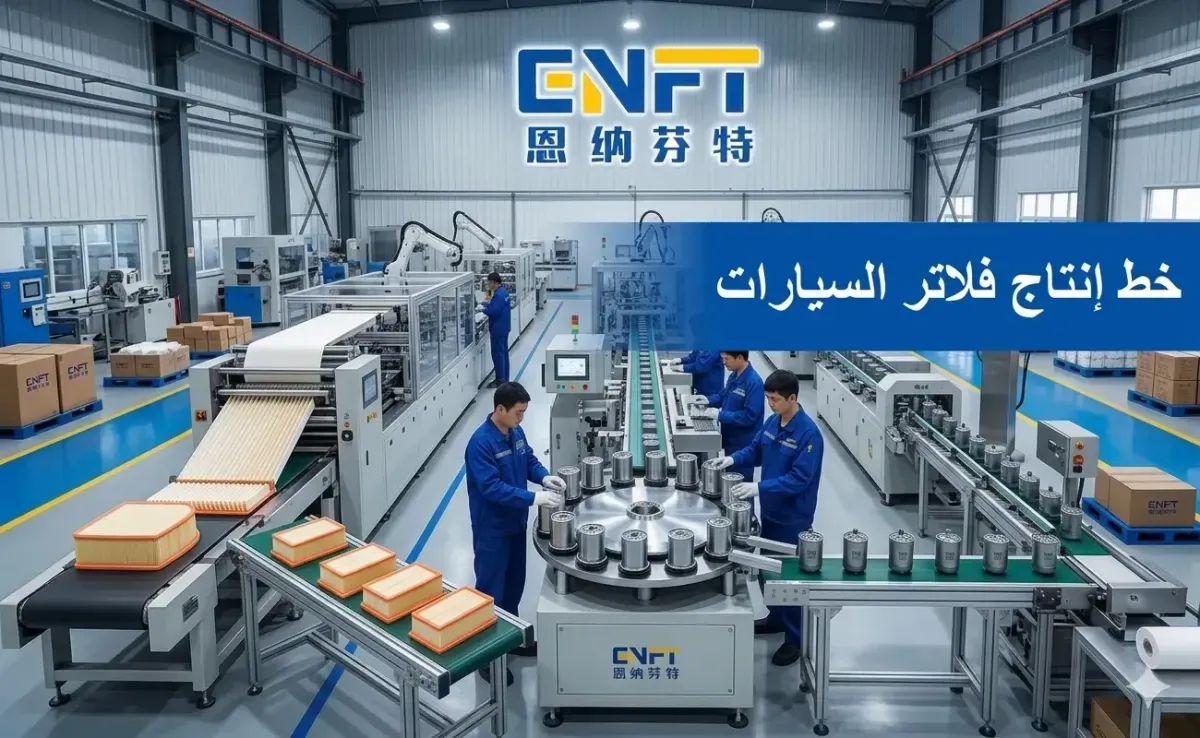
An automotive filter production line is one of the most important industrial projects in the automotive spare-parts sector, as filters are consumable products that require regular replacement as part of essential vehicle maintenance. Whether you are planning to establish a new factory or expand an existing business, choosing the right automotive filter production line determines product quality, production capacity, waste rates, and long-term operating costs.
A production line typically includes equipment for manufacturing oil filters, car air filters, and fuel filters. Depending on the needs of the target market, it may also include specialized lines for manufacturing air purification filters and industrial air filters.
What Is an Automotive Filter Production Line?
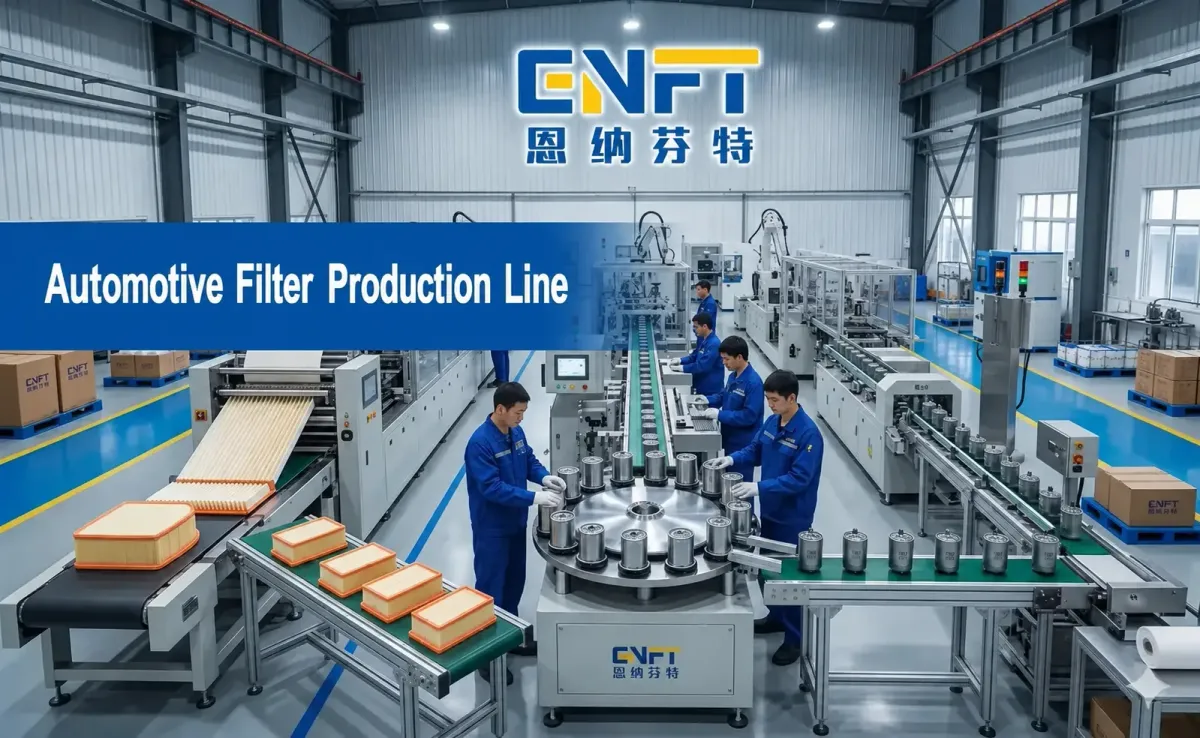
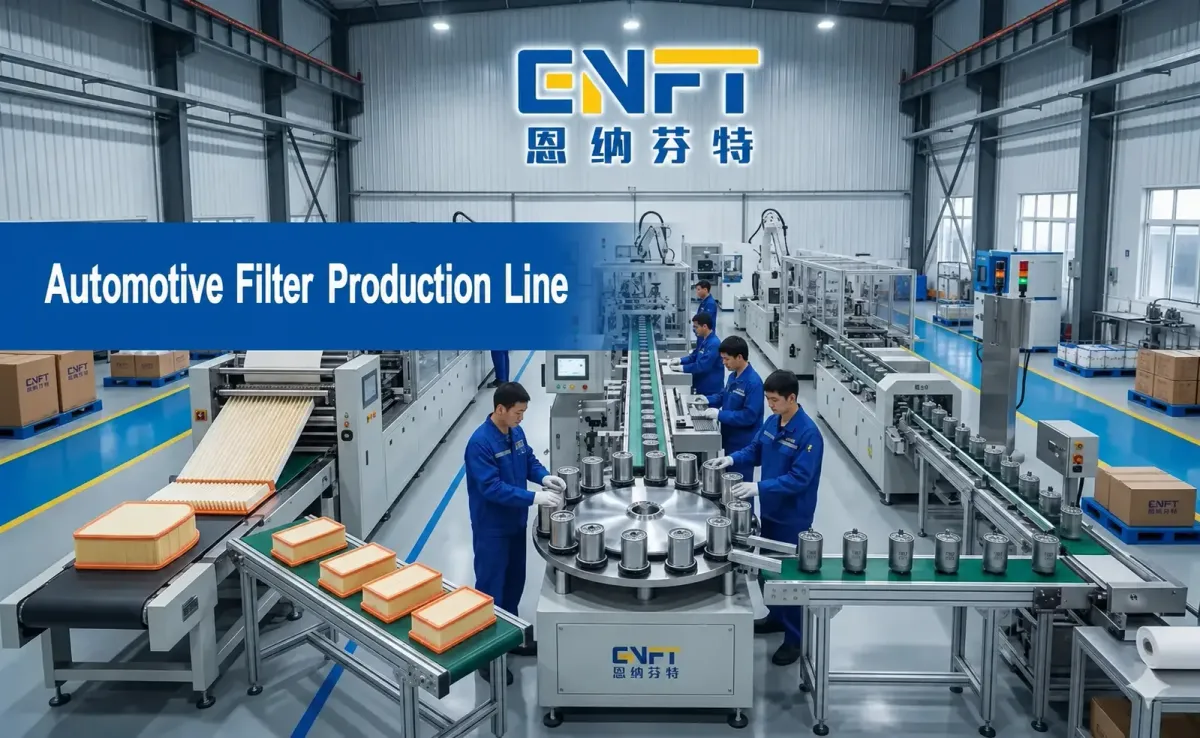
An automotive filter production line is an integrated set of machines and equipment designed to convert raw materials into ready-to-use filters for cars and vehicles. It includes processes such as cutting, forming, pleating filter paper, assembly, bonding, pressing, testing, printing, and packaging.
The production line may be dedicated to one type of filter, such as an oil filter production line, or it may be multi-purpose and capable of producing several types, including:
Oil filters
Air filters
Fuel filters
Cabin air filters
Air purification filters
Air filters for machinery and trucks
The line design depends on the target production volume, filter dimensions, target vehicle types, and the required level of automation.
Types of Automotive Filters That Can Be Manufactured
An automotive filter production line can be equipped to manufacture more than one type of filter. However, each type requires different equipment, molds, or operating stations.
Filter Type | Main Function | Examples of Use | Key Components |
|---|---|---|---|
Oil Filter | Removes impurities and metal particles from engine oil | Passenger cars and trucks | Metal casing, filter paper, valve, spring, gasket |
Air Filter | Cleans the air entering the engine | Cars and commercial vehicles | Pleated filter paper, rubber or plastic frame |
Fuel Filter | Prevents impurities from reaching the fuel system | Gasoline and diesel vehicles | Metal or plastic body, filter element |
Cabin Filter | Cleans the air inside the vehicle | Air-conditioning and ventilation systems | Filter paper, sometimes activated carbon |
Air Purification Filter | Cleans air in industrial or commercial applications | Workshops, factories, and buildings | Multi-layer filtration media |
Best Types of Air Filters for Cars
When discussing the best types of car air filters, there is no single type that suits every vehicle. The right choice depends on engine design, operating conditions, and the required filtration level.
The most important types include:
Pleated paper filters: The most widely used type, offering reasonable cost and good dust-trapping efficiency.
Synthetic fiber filters: Provide good resistance to moisture and certain harsh operating conditions.
Washable cotton filters: Used in some high-performance applications, but require careful maintenance.
Activated carbon filters: Commonly used in cabin filters to help reduce odors and pollutants.
Heavy-duty truck air filters: Require a larger filtration area and greater resistance to dust.
Therefore, when manufacturing a car air filter, the filter dimensions, filtration paper surface area, frame type, and airflow resistance must match the specifications of the target vehicle.
Components of an Automotive Filter Production Line
An automotive filter production line consists of standalone machines or interconnected stations. The number of machines varies depending on the type of filters being manufactured and the level of automation.
Machine or Station | Function in the Production Line |
|---|---|
Filter Paper Cutting Machine | Cuts filtration materials to the required dimensions |
Pleating Machine | Forms filter paper into pleats to increase the filtration surface area |
Filter Paper Bonding Machine | Secures the edges of filter paper using glue or hot-melt adhesive |
Filter Cover Manufacturing Machine | Forms metal or plastic covers |
Filter Assembly Machine | Assembles the filter element with the cover and housing |
Polyurethane Injection or Molding Machine | Produces or secures rubber frames for certain air filters |
Filter Pressing Machine | Ensures tight sealing of filter components |
Leak Testing Machine | Verifies that there are no leaks or assembly defects |
Printing Machine | Prints the brand name, part number, and specifications |
Packaging Machine | Prepares the product for sale and shipping |
In small projects, some processes can be carried out manually or using semi-automatic machines. Large factories, however, use automated production lines to reduce labor dependence and improve quality consistency.
Raw Materials Required for Manufacturing Automotive Filters
The raw materials depend on the type of filter, but there are essential materials used in most air, oil, and fuel filter manufacturing processes.
Raw Material | Use |
|---|---|
Filter Paper | The main component used to trap dust and impurities |
Metal Sheets | Used to manufacture oil filter bodies and covers |
Plastic | Used to manufacture certain housings and covers |
Polyurethane | Used to produce frames and edges for air filters |
Industrial Glue or Hot-Melt Adhesive | Used to secure filter paper and internal components |
Rubber Gaskets | Prevent leaks in oil and fuel filters |
Valves and Springs | Used inside certain oil filters |
Industrial Ink | Used to print brand names and product information |
Packaging Materials | Cartons, bags, labels, and barcodes |
Practical Example: Raw Materials for an Oil Filter
A conventional oil filter usually consists of:
An outer metal casing
A pleated paper filter element
A perforated center tube
An anti-drain back valve
A safety or bypass valve
An internal spring
A leak-proof rubber gasket
Upper and lower end caps
Any weakness in the quality of these components may lead to oil leakage, poor filtration performance, or engine damage. For this reason, raw materials should not be treated merely as a cost-cutting item.
Stages of Automotive Filter Manufacturing
The filter manufacturing process involves a series of organized steps that vary slightly depending on the filter type. However, the general sequence is as follows:
Defining Product Specifications
The part number, filter dimensions, vehicle type, filtration level, and materials used are determined.Preparing Raw Materials
Filter paper, metal sheets, frames, and adhesives are inspected before production begins.Cutting Filter Paper
The paper is cut according to the required width and length.Pleating Filter Paper
The paper is formed into evenly spaced pleats to increase the filtration area within a compact size.Securing the Filter Element
The paper edges are fixed using glue or sealing materials.Manufacturing the Filter Body or Frame
The metal or plastic housing is formed, or the air filter frame is prepared.Assembly
All components are installed in the correct sequence using assembly and pressing machines.Testing and Inspection
Leakage, dimensions, sealing strength, and assembly quality are tested.Printing and Packaging
Product information is printed, and the filter is packaged to protect it during storage and transportation.
How Does an Oil Filter Production Line Work?
An oil filter production line works by converting metal components and filter paper into a tightly sealed filter capable of withstanding oil pressure and engine heat.
Steps for Operating an Oil Filter Production Line
Forming the metal filter body
Cutting and pleating filter paper
Manufacturing the internal filter element
Installing the perforated center tube
Installing the valve, spring, and rubber gasket
Assembling the cover with the filter body
Pressing and sealing
Performing leak and pressure testing
Printing the part number and packaging
Practical Example
If a factory targets commonly used passenger-car filters, it can begin with a limited range of high-demand part numbers instead of attempting to manufacture hundreds of sizes from the first day. This reduces mold and inventory costs and makes quality control easier.
How Does an Air Filter Production Line Work?
An air filter production line focuses on manufacturing a filter element with a large surface area and an effective ability to allow airflow while trapping dust and impurities.
Steps for Manufacturing a Car Air Filter
Selecting suitable filter paper
Cutting the paper according to the filter dimensions
Pleating the paper precisely with evenly spaced folds
Securing the paper using glue or hot-melt adhesive
Preparing the plastic, metal, or rubber frame
Installing the filter element inside the frame
Injecting polyurethane when required
Inspecting the shape, dimensions, and bonding strength
Packaging and applying the part number
Why Is Pleat Accuracy Important?
The more evenly spaced and securely fixed the pleats are, the greater the filtration area and the better the airflow. Uneven pleats, on the other hand, may cause excessive airflow resistance or the collapse of the filter element during use.
This is where the importance of precise air filter manufacturing machines becomes clear, especially when producing automotive air filters and air purification filters with high-performance requirements.
How Does a Fuel Filter Production Line Work?
A fuel filter is designed to protect the fuel pump and fuel injectors from sediment and impurities. Its design varies between gasoline and diesel vehicles, as well as between metal and plastic filters.
Fuel Filter Production Stages
Preparing the metal or plastic filter housing
Cutting and preparing the filtration element
Installing the fuel inlet and outlet ports
Securing the filter element inside the housing
Sealing the filter tightly
Performing pressure leak testing
Printing product information and packaging
In diesel filters, the separation of water from fuel may be more important. Therefore, suitable filtration materials and designs must be selected for this application.
Production Capacity of an Automotive Filter Production Line
Production capacity varies depending on the type of machinery, automation level, number of molds, variety of sizes, and labor efficiency.
Line Type | Approximate Production Capacity | Suitable For |
|---|---|---|
Manual or Basic Line | 300 to 1,000 filters per day | Workshops and small projects |
Semi-Automatic Line | 1,000 to 5,000 filters per day | Medium-sized factories |
Automatic Line | 5,000 to 20,000+ filters per day | Large factories and brands |
These figures are approximate because oil filter production differs from air filter production. In addition, changing sizes and molds between products reduces actual output compared with continuous production of the same model.
Production Calculation Example
If a pleating machine produces 30 filter elements per minute and the factory operates for 8 hours per day, the theoretical capacity would be:
30 × 60 × 8 = 14,400 filter elements per day
However, actual production capacity will be lower after accounting for raw material changes, inspection, downtime, waste, and mold changes. Therefore, capacity should always be calculated based on realistic operating conditions, not only on theoretical machine speed.
Required Factory Space for an Automotive Filter Production Line
The required factory space depends on the number of machines, inventory volume, number of filter types, and the space allocated for packaging and storage.
Project Size | Recommended Area |
|---|---|
Small Project | 150 to 300 square meters |
Medium Factory | 500 to 1,000 square meters |
Large Multi-Line Factory | 1,500 square meters or more |
Practical Factory Layout
Raw material storage area
Filter paper cutting and pleating area
Assembly and pressing area
Quality testing area
Printing and packaging area
Finished product warehouse
Maintenance and spare-parts area
Administration and sales offices
The factory layout should allow materials to move in one direction: from raw materials to production, then inspection, and finally packaging. This helps reduce interference, confusion, and production errors.
Labor Requirements for Operating an Automotive Filter Production Line
Labor requirements vary depending on the level of automation. However, a factory usually requires a production team, quality team, maintenance team, and management staff.
Position | Suggested Initial Number |
|---|---|
Machine Operators | 2 to 6 |
Assembly and Packaging Workers | 2 to 8 |
Maintenance Technicians | 1 to 2 |
Quality Control Officers | 1 to 2 |
Warehouse Supervisor | 1 |
Production Supervisor | 1 |
Sales and Purchasing Staff | Depending on project size |
An automated line requires fewer direct labor workers, but it requires technicians with greater experience in operation, maintenance, and machine-setting control.
Automotive Filter Quality and Testing Standards
Filter quality does not depend only on its external appearance. It also depends on its actual filtration performance, pressure resistance, leak prevention, and performance consistency during use.
Key Quality Tests
Test | Purpose |
|---|---|
Dimensional Test | Ensures the filter matches vehicle specifications |
Leak Test | Ensures that oil or fuel does not leak from the filter body |
Pressure Test | Measures the filter’s ability to withstand operating pressure |
Crimping Strength Test | Ensures that the filter is tightly sealed |
Filtration Efficiency Test | Measures the ability of filter paper to capture particles |
Airflow Test | Important for air filter manufacturing |
Heat Resistance Test | Important for oil filters and adhesives |
Printing and Packaging Test | Ensures clear product information and proper product protection |
Example of a Common Quality Issue
An oil filter may look good externally, but using a weak rubber gasket or a non-compliant internal valve can lead to oil leakage or poor filter performance. For this reason, components should be tested before and after assembly, rather than relying only on visual inspection of the final product.
Technical Specifications to Consider Before Purchasing a Production Line
Before purchasing an automotive filter production line, do not focus only on the price or the advertised production speed. Technical and operational specifications must be compared carefully.
Pre-Purchase Checklist
What types of filters can the line produce?
What sizes and part numbers does it support?
Can molds be changed easily?
What is the actual production capacity for each filter type?
What is the expected waste rate?
Are the machines automatic or semi-automatic?
What type of control system is used?
Are spare parts available?
Does the supplier provide installation and training?
Are there clear warranties and after-sales services?
What are the electricity and compressed-air requirements?
Are quality-testing machines included in the offer?
Practical Comparison Between Two Offers
One supplier may offer a machine at a lower price but may not include molds, training, or a leak-testing machine. Another supplier may offer a slightly higher price but include a complete setup and after-sales service. In this case, the total project cost should be compared, not just the machine price.
Difference Between Automatic and Semi-Automatic Automotive Filter Production Lines
Feature | Automatic Line | Semi-Automatic Line |
|---|---|---|
Production Speed | Higher | Medium |
Dependence on Labor | Lower | Higher |
Quality Consistency | Higher when properly adjusted | Depends more heavily on the operator |
Initial Investment Cost | Higher | Lower |
Ease of Start-Up | Requires technical training | Easier for small projects |
Flexibility in Changing Products | May require adjustments and molds | Often more flexible at the beginning |
Suitable For | Large factories | Small and medium-sized factories |
When Should You Choose a Semi-Automatic Line?
A semi-automatic line is suitable if you are starting with a limited number of products, want to test the market, or have a limited investment budget.
When Should You Choose an Automatic Line?
An automatic line is the better option when you have stable demand and large production volumes, and you need to reduce labor costs, improve quality consistency, and expand production capacity.
Maintenance of Automotive Filter Manufacturing Machines
Regular maintenance reduces unexpected downtime and helps maintain production accuracy and filter quality.
Basic Maintenance Schedule
Period | Maintenance Tasks |
|---|---|
Daily | Clean machines, inspect sensors, and remove adhesive and material residues |
Weekly | Inspect belts, connections, oil levels, and air pressure |
Monthly | Calibrate measuring components, inspect molds, and lubricate moving parts |
Every 3 to 6 Months | Perform a comprehensive inspection of motors and electrical systems and replace worn components |
Important Maintenance Tips
Keep the most frequently used spare parts available inside the factory.
Do not delay addressing abnormal vibrations or unusual noises.
Document recurring faults to identify their root causes.
Train operators on daily cleaning and inspection procedures.
Use adhesives and raw materials that are compatible with machine specifications.
How to Choose an Automotive Filter Production Line Supplier
Choosing a supplier is a strategic decision because you are not only purchasing a machine; you are purchasing production capability, operational expertise, and ongoing support.
Supplier Selection Criteria
Proven experience in automotive filter manufacturing machinery
Ability to provide a line suitable for the target filter types
Clear technical specifications in the quotation
Availability of real photos and operating videos of the machines
Ability to test the machine before shipment
Training for workers and technicians
Availability of spare parts and technical support
Ability to provide solutions that can be expanded in the future
Ability to customize molds according to required part numbers
A written warranty and clear service terms
Common Operational Experience in Factories
One of the most common mistakes is for an investor to purchase a high-speed production line without ensuring that it is compatible with locally available raw materials or the most in-demand part numbers. The result may be a good machine that does not manufacture the filters customers actually need.
Therefore, the target market and product list should be defined before requesting a quotation.
Advantages of Purchasing an Automotive Filter Production Line from ENFT
ENFT provides specialized solutions for businesses looking to establish or develop an automotive filter factory, with a focus on selecting the right machines for the product type and target production capacity.
Key advantages customers can receive when choosing ENFT include:
Integrated solutions for oil, air, and fuel filter production lines
The option to choose an automatic or semi-automatic line based on budget and target production volume
Support in identifying essential and optional machines
The ability to prepare molds and sizes according to target products
Suitable solutions for manufacturing car air filters, oil filters, and fuel filters
Technical support for installation, operation, and training
The ability to expand later by adding new machines to the production line
Assistance in building a production line that balances quality, cost, and production capacity
Do You Want to Start an Automotive Filter Manufacturing Project?
If you are planning to establish a factory or upgrade an existing production line, contact the ENFT team today to receive an initial consultation about the automotive filter production line that best suits your needs.
Send us the types of filters you want to manufacture, your target daily production capacity, available factory space, and target country. We will help you select the appropriate machinery and equipment to build a practical, scalable production line.
Contact ENFT today to receive a customized technical quotation for an automotive filter production line.