
Automotive Filter Manufacturing Machines: The Complete Guide to Choosing the Best Equipment and Production Lines
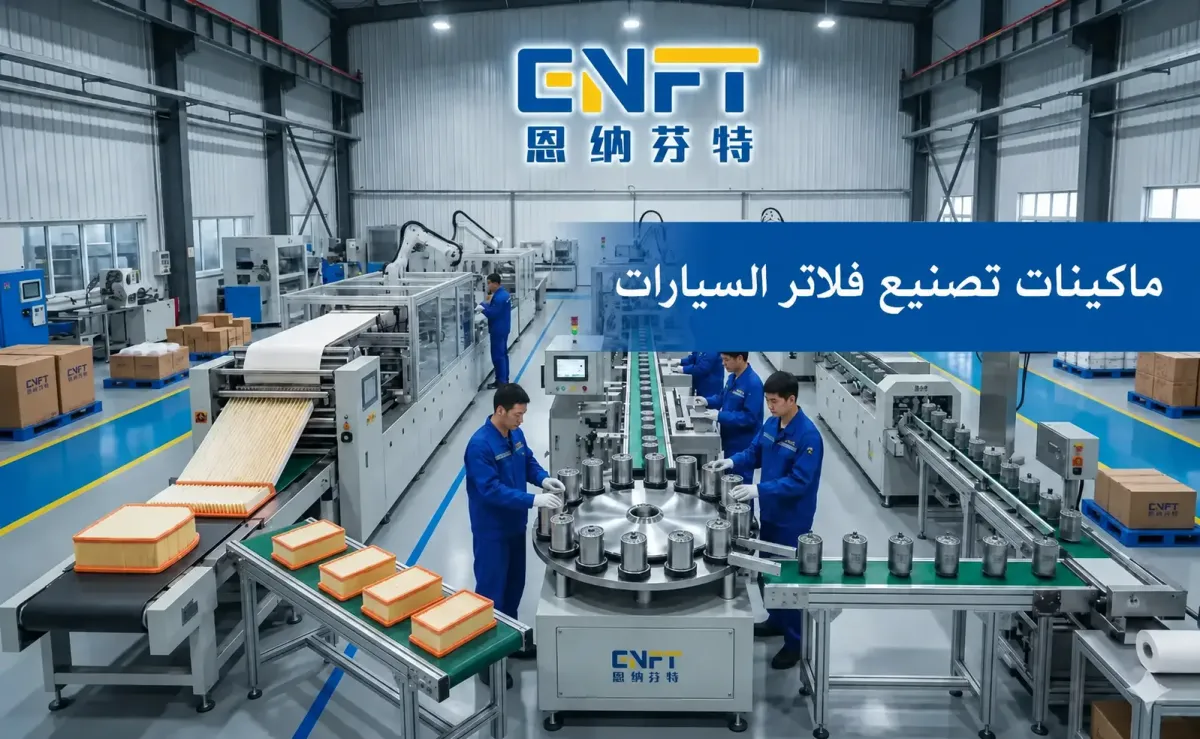
If you are planning to enter the automotive filter manufacturing industry, selecting the right automotive filter manufacturing machines is the most important investment decision you will make. The success of a filter factory depends not only on the quality of raw materials but also on the efficiency of the machinery, production capacity, manufacturing precision, and operating and maintenance costs.
Whether you are establishing a new factory or upgrading an existing production line, understanding the different types of automotive filter manufacturing machines, how they operate, and their technical requirements will help you make the right purchasing decision to maximize productivity and product quality. Choosing the right supplier also ensures reliable technical support and long-term production stability.
Automotive Filter Manufacturing Machines and Their Importance in Production Lines
Automotive filter manufacturing machines are the backbone of any factory producing oil, air, or fuel filters. These machines transform raw materials into finished products with precise dimensions and high-quality standards.
Modern manufacturing machines help to:
Increase production capacity.
Reduce material waste.
Improve product quality.
Minimize dependence on manual labor.
Ensure consistent quality across all manufactured filters.
Lower long-term production costs.
These machines are also used to manufacture:
Engine oil filters.
Engine air filters.
Industrial air filters.
Oil filters.
Fuel filters.
Cabin air filters.
Types of Automotive Filter Manufacturing Machines
The type of machine required depends on the specific filter being produced.
Machine Type | Function |
|---|---|
Filter Paper Pleating Machine | Forms pleats in the filter paper |
Paper Cutting Machine | Cuts filter paper to the required dimensions |
Filter Paper Bonding Machine | Bonds and secures the edges of the filter element |
Metal Cover Forming Machine | Manufactures oil filter housings |
Filter Assembly Machine | Assembles all filter components |
Filter Pressing Machine | Seals filters securely |
Polyurethane Injection Machine | Produces air filter frames |
Leak Testing Machine | Performs quality and leakage testing |
Printing Machine | Prints product information |
Packaging Machine | Prepares products for distribution |
Essential Machines in an Automotive Filter Production Line
An automotive filter production line typically consists of a series of interconnected machines operating in a predefined sequence.
Production Stage | Machine |
|---|---|
Raw Material Preparation | Paper Cutting Machine |
Filter Element Formation | Pleating Machine |
Paper Bonding | Bonding Machine |
Housing Manufacturing | Forming Machine |
Assembly | Assembly Machine |
Sealing | Pressing Machine |
Quality Inspection | Leak Testing Machine |
Packaging | Packaging Machine |
Practical Example
In a factory producing 5,000 filters per day, the process begins by cutting the filter paper, followed by pleating it, installing it inside a metal or plastic housing, assembling all internal components, conducting quality inspections, and finally packaging the finished products before shipment.
How Do Automotive Filter Manufacturing Machines Work?
The manufacturing process typically follows these stages:
Feeding raw materials into the production line.
Cutting the filter paper.
Forming the pleats.
Securing the filter element.
Manufacturing the filter housing.
Installing the internal components.
Pressing and sealing the filter.
Performing quality inspections.
Printing product information.
Packaging the finished product.
These operations may be carried out manually, semi-automatically, or fully automatically, depending on the type of machinery used.
Raw Materials Used by Automotive Filter Manufacturing Machines
Automotive filter manufacturing machines are designed to process a variety of raw materials, depending on the type of filter being produced.
Raw Material | Application |
|---|---|
Filter Paper | Filtration medium |
Metal Sheets | Oil filter housing |
Engineering Plastics | Certain filter housings |
Polyurethane | Air filter frame |
Industrial Adhesive | Bonds the filter paper |
Rubber | Prevents leakage |
Valves | Oil filters |
Springs | Oil filters |
Carton | Packaging |
By changing the molds and tooling, the same machines can also be used to manufacture:
Engine air filters.
Engine oil filters.
Certain types of industrial air filters.
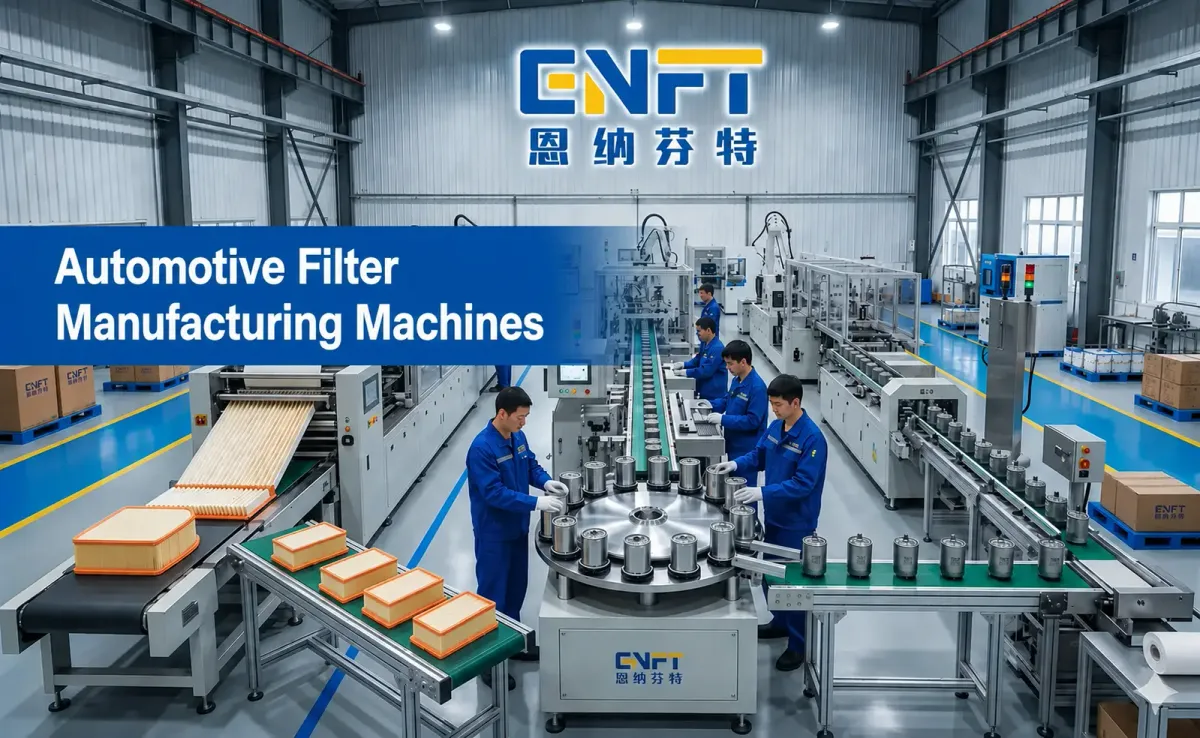
Technical Specifications to Consider Before Purchasing Automotive Filter Manufacturing Machines
Before investing in automotive filter manufacturing machines, it is essential to evaluate several technical specifications.
Specification | Importance |
|---|---|
Production Capacity | Determines factory output |
Operating Speed | Increases productivity |
Manufacturing Precision | Improves product quality |
Ease of Mold Change | Enables production of multiple filter models |
Power Consumption | Reduces operating costs |
Ease of Maintenance | Minimizes downtime |
Spare Parts Availability | Ensures continuous operation |
Warranty | Protects your investment |
Pre-Purchase Checklist
- Is the machine suitable for manufacturing both oil filters and air filters?
- Can it produce multiple filter sizes?
- Does the supplier provide operator training?
- Are spare parts readily available?
- Is technical support included?
- Does the production capacity meet your factory requirements?
- Can the production line be expanded in the future?
Difference Between Manual, Semi-Automatic, and Fully Automatic Machines
Feature | Manual | Semi-Automatic | Fully Automatic |
|---|---|---|---|
Initial Cost | Low | Medium | High |
Production Capacity | Low | Medium | High |
Labor Requirement | High | Moderate | Low |
Product Quality | Depends on the operator | Good | Highly consistent |
Material Waste | Higher | Moderate | Lowest |
Best Suited For | Small workshops | Medium-sized factories | Large-scale factories |
How to Choose the Best Automotive Filter Manufacturing Machine
Selecting the right machine should not be based on price alone.
Follow these steps:
Determine the type of filters you plan to manufacture.
Define your required production capacity.
Choose the appropriate automation level.
Review power consumption requirements.
Ensure maintenance services are available.
Request a live machine demonstration.
Verify quality certifications.
Choose a supplier that provides long-term technical support.
Practical Example
One investor started with a semi-automatic production line dedicated to manufacturing oil filters. As market demand increased, they added a polyurethane injection machine to begin producing air filters without replacing the existing production line, significantly reducing expansion costs.
Production Capacity of Automotive Filter Manufacturing Machines
Production capacity varies depending on the machine type and level of automation.
Machine Type | Average Production Capacity |
|---|---|
Small Machine | 300–800 filters per day |
Semi-Automatic Machine | 1,000–5,000 filters per day |
Fully Automatic Machine | 5,000–20,000+ filters per day |
Production Capacity Example
If a filter paper pleating machine produces 35 filter elements per minute, the theoretical daily output is:
35 × 60 × 8 = 16,800 filter elements per day
However, actual production capacity should account for machine downtime, mold changes, maintenance, and production interruptions to obtain a realistic output figure.
Operating Requirements for Automotive Filter Manufacturing Machines
To ensure smooth and efficient operation, automotive filter manufacturing machines require the following:
A stable industrial power supply.
A compressed air system (air compressor).
Proper ventilation.
High-quality raw materials that meet specifications.
Skilled machine operators.
Qualified maintenance technicians.
Quality inspection and measuring equipment.
A properly organized raw material storage area.
Maintenance of Automotive Filter Manufacturing Machines
Preventive maintenance is essential for minimizing unexpected breakdowns, maintaining product quality, and extending the service life of the equipment.
Maintenance Interval | Required Tasks |
|---|---|
Daily | Clean the machines and remove adhesive and material residues |
Weekly | Lubricate moving parts and inspect belts |
Monthly | Calibrate molds and inspect critical components |
Every 6 Months | Perform comprehensive preventive maintenance |
Maintenance Best Practices
Always use genuine replacement parts.
Clean adhesive residues from the machines daily.
Monitor unusual vibrations and abnormal noises.
Keep detailed maintenance records to identify recurring issues.
Train operators to perform routine inspections before starting each shift.
Common Problems with Automotive Filter Manufacturing Machines and Their Solutions
Even with proper maintenance, certain operational issues may occur. Identifying the root cause quickly helps reduce downtime and improve production efficiency.
Problem | Possible Cause | Recommended Solution |
|---|---|---|
Uneven filter pleats | Worn or improperly calibrated mold | Replace or recalibrate the mold |
Weak adhesive bonding | Incompatible or poor-quality adhesive | Use adhesive that meets the required specifications |
Oil filter leakage | Insufficient pressing force | Recalibrate the filter pressing machine |
Machine downtime | Lack of preventive maintenance | Implement a scheduled maintenance program |
Excessive material waste | Incorrect machine settings | Train operators and optimize machine calibration |
Comparing Automotive Filter Manufacturing Machine Suppliers
When evaluating suppliers, do not base your decision solely on price. Instead, compare the overall value they provide.
Evaluation Criteria | Professional Supplier | Low-Cost Supplier |
|---|---|---|
Manufacturing Quality | High | Inconsistent |
Operator Training | Included | Limited or unavailable |
Warranty Coverage | Comprehensive | Limited |
Spare Parts Availability | Readily available | May be difficult to obtain |
Technical Support | Ongoing | Limited |
Future Expansion Options | Excellent | Restricted |
It is also worthwhile to compare companies that manufacture complete automotive filter production lines with suppliers that sell only individual machines. Some manufacturers provide comprehensive solutions that include installation, operator training, commissioning, and after-sales support, making them a more cost-effective long-term investment.
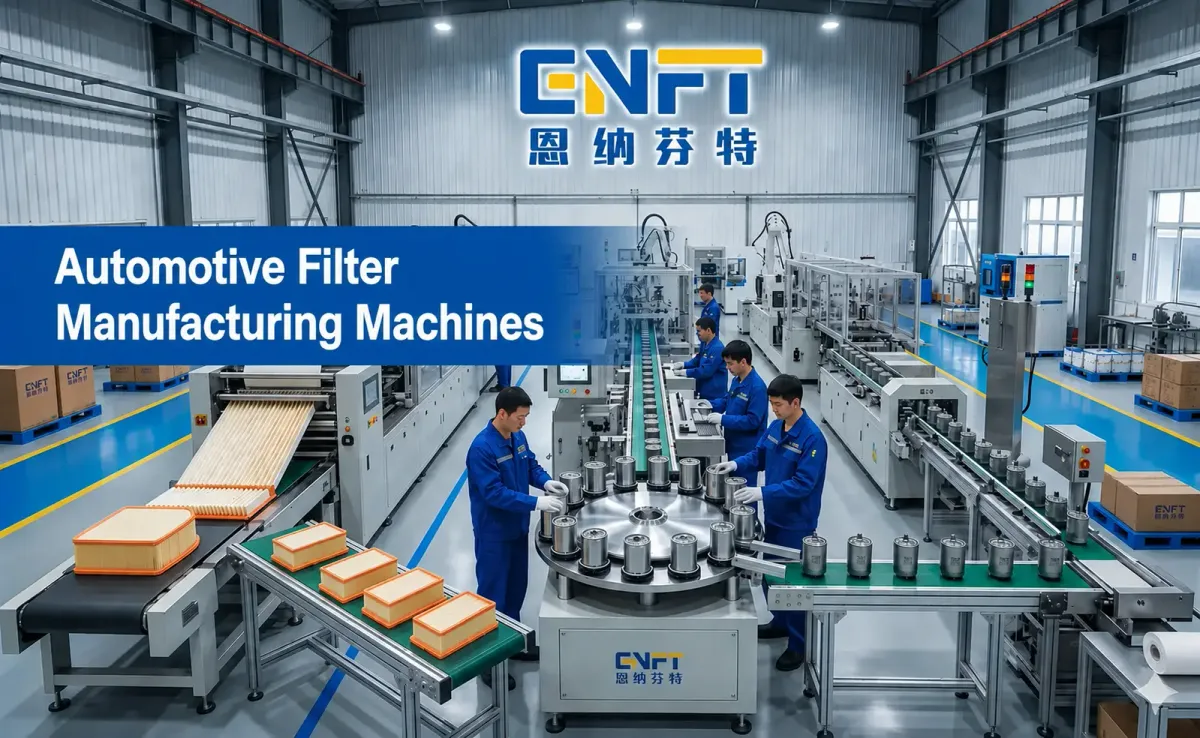
Is It Better to Buy Individual Machines or a Complete Production Line?
Comparison | Individual Machines | Complete Production Line |
|---|---|---|
Initial Investment | Lower | Higher |
Scalability | Excellent | Good |
Operational Integration | Requires coordination | Fully integrated |
Production Speed | Moderate | High |
Product Quality Consistency | Depends on system integration | More consistent |
When Should You Choose Individual Machines?
Individual machines are the better choice if:
You are launching a small manufacturing business.
You plan to produce only one type of automotive filter.
Your investment budget is limited.
You prefer expanding your factory gradually.
When Should You Choose a Complete Production Line?
A complete production line is the ideal solution if:
You are targeting large-scale commercial production.
You expect rapid business growth.
You require high production efficiency and consistent product quality.
You want a fully integrated manufacturing process with minimal manual intervention.
Advantages of Purchasing Automotive Filter Manufacturing Machines from ENFT
ENFT provides comprehensive solutions for investors looking to establish or expand automotive filter manufacturing facilities, with a strong focus on quality, efficiency, and future scalability.
Key advantages include:
High-precision machines for manufacturing oil filters, air filters, and fuel filters.
Both semi-automatic and fully automatic production line options.
Professional assistance in selecting the appropriate molds and filter dimensions.
Comprehensive operator and maintenance training programs.
Reliable technical support and after-sales service.
Complete manufacturing solutions for engine oil filters, engine air filters, and industrial air filters.
The flexibility to expand production by adding new machines without redesigning the entire factory.
Expert engineering consultation to help select the most suitable production line based on your investment budget and production goals.
Start Your Automotive Filter Manufacturing Project with ENFT
If you are looking for automotive filter manufacturing machines that match your factory's production requirements, the ENFT team is ready to help you select the ideal solution.
Simply provide us with the following information:
The types of filters you intend to manufacture.
Your required daily production capacity.
Your available factory space.
Your target country or market.
Your estimated investment budget.
Contact ENFT today to receive a free consultation and a customized technical proposal for the most suitable automotive filter manufacturing machines and complete production lines.