
Air Filter Manufacturing Machine: The Complete Guide to Building a Successful Automotive Air Filter Manufacturing Business
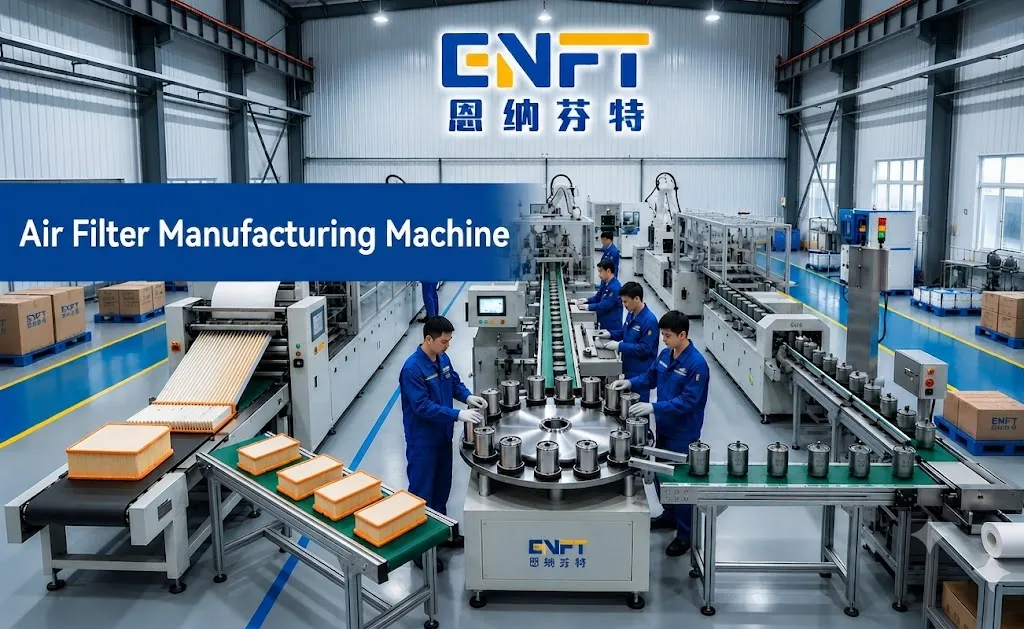
An air filter manufacturing machine is one of the most essential pieces of industrial equipment for investors looking to enter the automotive spare parts industry, particularly as demand for automotive air filter manufacturing continues to grow in both local and international markets. Whether you are searching for the best air filter manufacturing machine or planning to establish a factory capable of competing with leading air filter manufacturers, this comprehensive guide covers everything you need to know—from machine types and production lines to raw materials, manufacturing processes, and selecting the right equipment for your business.
In addition, we'll explore the key factors that contribute to a successful manufacturing operation, explain how production quality directly influences the quality of the finished product, and provide practical examples and comparison tables to help you make informed investment decisions.
What Is an Air Filter Manufacturing Machine?
An air filter manufacturing machine is a combination of specialized industrial equipment designed to manufacture air filters used in passenger vehicles, trucks, industrial machinery, and certain commercial applications. These machines convert raw materials into finished air filters through a series of precise automated manufacturing processes.
The specifications of an air filter manufacturing machine vary depending on the type of filter being produced, including:
Engine air filters
Cabin air filters
Industrial air filters
Heavy equipment air filters
Modern machines are equipped with advanced PLC control systems and intelligent HMI touch-screen interfaces, ensuring stable production, consistent product quality, and minimal material waste.
Why Is the Demand for Air Filter Manufacturing Machines Increasing?
Several factors are driving the growing demand for air filter manufacturing machines, including:
The increasing number of vehicles worldwide
Rising demand for both OEM and aftermarket replacement filters
Expansion of export opportunities
Flexible production lines capable of manufacturing multiple filter models
Higher profit margins compared to many other manufacturing industries
For these reasons, many investors prefer purchasing an air filter manufacturing machine rather than relying on imported finished products.
Types of Air Filters That Can Be Manufactured
Modern air filter manufacturing machines can produce a wide variety of air filters to meet market demands.
Filter Type | Application | Key Benefits |
Engine Air Filter | Engine protection | Prevents dust from entering the engine and improves combustion efficiency |
Cabin Air Filter | Interior air purification | Improves air quality for vehicle occupants |
Industrial Air Filter | Factories and industrial equipment | Withstands demanding operating conditions |
Heavy Equipment Air Filter | Loaders, trucks, and heavy machinery | Long service life |
Automotive Air Filter Manufacturing
Automotive air filter manufacturing is one of the fastest-growing sectors in the automotive components industry, as nearly every vehicle relies on an air filter to keep contaminants out of the engine.
Modern production lines are capable of manufacturing thousands of different filter sizes, allowing factories to serve numerous automotive brands without requiring a separate production line for each model.
Best Types of Automotive Air Filters
The best automotive air filters vary depending on the filter media and intended application.
Filter Type | Service Life | Performance |
Paper Filter | Medium | Most widely used |
Synthetic Fiber Filter | Long | Excellent moisture resistance |
High-Performance Cotton Filter | Long | Provides increased airflow |
Multi-Layer Filter | Very Long | Superior filtration efficiency |
Choosing the appropriate filter type depends on your target customers, desired product quality, and production costs.
Types of Air Filter Manufacturing Machines
There is no single air filter manufacturing machine capable of performing every production process. Instead, a complete production line typically consists of several specialized machines.
1. Filter Paper Pleating Machine
This machine folds the filter paper with high precision to create the optimal spacing between pleats, directly affecting filtration efficiency.
2. Filter Bonding and Assembly Machine
Used to secure the filter media inside the frame using high-quality industrial adhesives.
3. Polyurethane Injection Machine
This machine forms the rubber sealing frame around the filter with exceptional accuracy and is one of the most important pieces of equipment in modern production lines.
4. Cutting Machine
Used to cut filter paper and various components according to the required dimensions.
5. Testing Machine
After production, each filter undergoes testing for:
Airflow rate
Bonding strength
Frame quality
Filtration efficiency
Essential Machines in an Air Filter Production Line
A professional air filter production line typically consists of the following equipment:
Machine | Function |
Raw Material Unwinding Machine | Prepares filter media |
Pleating Machine | Forms filter pleats |
Cutting Machine | Cuts components to size |
Assembly Machine | Assembles filter components |
PU Injection Machine | Forms the sealing frame |
Pressing Machine | Secures assembled components |
Testing Machine | Performs quality inspection |
Packaging Machine | Prepares products for shipment |
Practical Example:
A factory producing 3,000 air filters per day typically operates a fully automated production line that integrates all these machines. This minimizes manual labor, improves product consistency, and significantly increases production efficiency.
Air Filter Manufacturing Process
Manufacturing high-quality air filters involves several carefully coordinated production stages.
Stage 1: Raw Material Preparation
Filter paper, adhesives, polyurethane, and other materials are inspected to ensure they meet production specifications.
Stage 2: Filter Paper Pleating
The pleating machine folds the filter paper into a precise pattern that maximizes the effective filtration surface area.
Stage 3: Cutting
The pleated filter media is cut according to the dimensions required for the specific filter model.
Stage 4: Assembly
The filter media is secured inside the frame using advanced adhesive bonding or polyurethane injection technology.
Stage 5: Frame Formation
Polyurethane is injected—or plastic or metal components are assembled, depending on the filter design—to create the outer frame.
Stage 6: Quality Inspection
Quality control includes:
Airflow testing
Pressure resistance testing
Bonding strength testing
Visual inspection of dimensions and finishing quality
Stage 7: Packaging
After successfully passing all quality inspections, the finished filter is labeled, packaged, and prepared for distribution.
Practical Production Line Example
Suppose an investor plans to manufacture air filters for passenger vehicles and light-duty trucks. In this case, the production line can be equipped with a high-speed pleating machine, a polyurethane injection machine, and an automatic testing unit. By simply changing the molds, the same production line can manufacture dozens of different filter sizes without replacing the entire system. This provides greater manufacturing flexibility, enables the factory to meet a wider range of customer requirements, and significantly reduces long-term operating costs.
Raw Materials Used in Air Filter Manufacturing
The quality of the finished product depends heavily on the quality of the raw materials used. Even with an advanced Air Filter Manufacturing Machine, using low-quality materials will negatively affect the filter's performance and service life.
Below are the primary raw materials used in car air filter manufacturing:
Raw Material | Application | Key Advantages |
Filter Paper | Primary air filtration medium | High filtration efficiency and moisture resistance |
Synthetic Media | Alternative filtration material for certain applications | Longer lifespan and greater durability |
Polyurethane (PU) | Manufacturing the rubber frame | High flexibility and excellent vibration resistance |
Engineering Plastic | Manufacturing certain structural components | Lightweight and durable |
Metal Mesh | Reinforcing the filter | Prevents deformation during operation |
Industrial Adhesives | Bonding filter components | Resistant to heat and oil |
Important Tip: The quality of an air filter depends not only on the raw materials but also on their compatibility with the Air Filter Manufacturing Machine and the precision of every production stage.
Technical Specifications of an Air Filter Manufacturing Machine
When comparing equipment offered by air filter manufacturing companies or machinery suppliers, carefully reviewing the technical specifications is essential, as they directly affect production capacity and product quality.
Key Technical Specifications
Specification | Importance |
Production Capacity | Determines the number of filters produced per hour |
Operating Speed | Impacts overall factory efficiency |
Cutting Accuracy | Reduces material waste |
PLC Control System | Simplifies operation and minimizes errors |
Touch Screen Interface | Makes machine setup and operation easier |
Mold Compatibility | Allows production of multiple filter models |
Power Consumption | Reduces operating costs |
Material Waste Rate | Indicates machine efficiency |
Practical Example
If your target is to manufacture 1,500 air filters per day, a semi-automatic machine may be sufficient during the initial stage. However, if you plan to export your products or supply large distributors, investing in a fully automatic production line with higher output capacity is the better long-term solution, allowing you to meet future demand without replacing your equipment.
How to Choose the Best Air Filter Manufacturing Machine
Selecting the right Air Filter Manufacturing Machine should not be based solely on price. Instead, several technical and operational factors must be carefully evaluated.
1. Determine the Types of Filters You Will Produce
Before purchasing, ask yourself:
Will you manufacture passenger car air filters?
Truck air filters?
Industrial air filters?
Or all of the above?
Each product category may require different molds or production configurations.
2. Evaluate the Production Capacity
Choose a machine that meets your current production requirements while allowing room for future expansion.
3. Ensure Easy Mold Changeover
The faster the mold replacement process, the greater your ability to manufacture multiple filter models efficiently.
4. Verify the Quality of the Control System
Modern machines equipped with PLC control systems and touch-screen HMIs provide:
More stable operation
Reduced human error
Easier operator training
Precise production monitoring
5. Consider After-Sales Support
Choose a supplier that provides:
Operator training
Readily available spare parts
Remote technical support
Scheduled maintenance services
Machine Comparison Table
Feature | Semi-Automatic | Fully Automatic |
Investment Cost | Lower | Higher |
Labor Requirement | Higher | Lower |
Production Capacity | Medium | High |
Error Rate | Higher | Lower |
Future Expansion | Limited | Excellent |
Product Quality | Good | Excellent |
If your goal is to build a strong brand in the automotive filtration industry, investing in a fully automatic production line is generally the most cost-effective long-term decision.
Requirements for Establishing an Air Filter Manufacturing Factory
Building a successful factory requires much more than purchasing an Air Filter Manufacturing Machine. Every aspect of the project must be carefully planned to ensure stable production and a profitable return on investment.
First: Choosing the Right Location
The factory should ideally be located within an industrial zone that offers:
Industrial electrical power
Reliable water supply
Convenient transportation access
Close proximity to suppliers and customers
Second: Factory Space
The required factory size depends on the production scale, but it typically includes:
Raw material storage area
Production workshop
Quality inspection area
Packaging section
Finished goods warehouse
Administrative offices
Third: Workforce Requirements
A typical production team includes:
Machine Operators
Maintenance Technicians
Quality Control Inspectors
Packaging Personnel
Production Manager
As automation increases, fewer workers are required while maintaining higher productivity.
Fourth: Quality Control System
A successful factory implements quality inspections throughout every stage of production, including:
Filter dimension inspection
Adhesion strength testing
Airflow rate measurement
Filtration efficiency testing
Packaging quality inspection
Fifth: Market Research
Before launching your project, conduct a comprehensive market analysis covering:
Local market demand
Export opportunities
Competitive products
Best-selling filter categories
Requirements of automotive service centers and spare parts distributors
The more accurate your market research, the easier it becomes to select the most suitable Air Filter Manufacturing Machine and identify the products with the highest profit potential.
Important Note About Air Filter Installation
Although this article primarily focuses on manufacturing, many users also search for how to install an air filter. In general, the installation procedure varies depending on the vehicle model, but it typically includes the following steps:
Open the air filter housing cover.
Carefully remove the old air filter.
Clean the filter housing to remove dust and debris.
Install the new filter in the correct orientation.
Securely close the housing cover and ensure all clips are properly fastened.
Proper installation helps maintain maximum filtration efficiency, improves engine performance, and reduces fuel consumption. Therefore, always follow the vehicle manufacturer's installation instructions.
After selecting the appropriate equipment and completing the factory setup, the next stage is production operation and management, which ultimately determines the long-term success and sustainability of the business. In the next section, we will discuss Air Filter Manufacturing Machine maintenance, common production challenges, the benefits of investing in this industry, and practical recommendations to consider before purchasing manufacturing equipment.
Air Filter Manufacturing Machine Maintenance
Regular maintenance is one of the most important factors in maintaining the efficiency of an Air Filter Manufacturing Machine and ensuring continuous production with the highest quality standards. Even the most advanced production lines can experience performance degradation if a preventive maintenance program is not implemented consistently.
Maintenance is not limited to repairing breakdowns; it also includes routine inspections, cleaning, calibration, and replacing worn components before they reach the end of their service life.
Recommended Maintenance Schedule
Frequency | Maintenance Tasks |
Daily | Clean the machine, remove raw material residue, inspect sensors and the compressed air system |
Weekly | Inspect belts, lubricate moving parts, and verify pleating and cutting accuracy |
Monthly | Check the PLC control system, inspect motors, and examine molds |
Every 6 Months | Perform complete machine calibration and replace worn components when necessary |
Annually | Conduct comprehensive maintenance for the entire production line |
Signs That Your Machine Requires Maintenance
If you notice any of the following symptoms, it may be time to inspect your Air Filter Manufacturing Machine:
Reduced production speed
Irregular filter paper pleats
Increased number of defective products
Polyurethane leakage
Unusual vibrations or abnormal noise
Increased power consumption
Practical Tip:
Keeping a maintenance log for each machine helps identify recurring issues, optimize maintenance schedules, and improve long-term operational efficiency.
Benefits of Investing in an Air Filter Manufacturing Machine
The car air filter manufacturing industry continues to experience strong growth due to the increasing number of vehicles worldwide and the constant demand for replacement filters. As a result, investing in an Air Filter Manufacturing Machine presents an excellent opportunity for manufacturers and entrepreneurs.
Key Benefits
1. Continuous Market Demand
Air filters are consumable automotive components that require regular replacement, creating ongoing demand from automotive service centers, spare parts distributors, and vehicle dealers.
2. Easy Business Expansion
Manufacturers can begin with a medium-capacity production line and later expand by adding new machines or upgrading the production line to manufacture additional filter models without building an entirely new factory.
3. Diverse Customer Base
Potential customers include:
Automotive spare parts distributors
Vehicle maintenance companies
Automobile assembly plants
International export markets
Trading and export companies
4. Higher Added Value
Instead of selling raw materials, manufacturing air filters allows companies to produce branded finished products with significantly higher profit margins.
5. Export Opportunities
Many markets across the Middle East, Africa, and Asia continue to experience growing demand for high-quality air filters, especially products that comply with international quality standards.
Common Challenges in Air Filter Manufacturing
Although the air filter manufacturing industry offers significant growth opportunities, manufacturers should be prepared for several operational challenges.
High Quality Requirements
Even minor errors during pleating, cutting, or assembly can reduce filter performance and lead to product rejection by customers.
Solution:
Implement a strict quality control system and perform inspections throughout every stage of production.
Multiple Filter Sizes
Automotive manufacturers produce thousands of different vehicle models, requiring production lines capable of accommodating various filter dimensions.
Solution:
Choose manufacturing equipment that supports quick and efficient mold changeovers.
Raw Material Quality
Low-quality raw materials can reduce filtration efficiency and shorten the service life of the finished filter.
Solution:
Work with reliable suppliers and thoroughly inspect all raw materials before production.
Production Downtime
Unexpected machine failures can interrupt production schedules and increase operating costs.
Solution:
Implement a preventive maintenance program and maintain an inventory of essential spare parts.
Market Competition
Manufacturers compete with both domestic and imported brands, particularly well-established international companies.
Solution:
Focus on superior product quality, reliable delivery schedules, and manufacturing filters that meet customer requirements.
Tips Before Purchasing an Air Filter Manufacturing Machine
Before making your investment, carefully evaluate both the technical and commercial aspects of the equipment.
Pre-Purchase Checklist
Question | Why It Matters |
Does the production capacity match your project requirements? | Prevents purchasing equipment that is either oversized or undersized |
Can molds be changed easily? | Supports future product diversification |
Is after-sales service available? | Ensures uninterrupted production |
Are spare parts readily available? | Reduces downtime |
Is operator training provided? | Improves operational efficiency and reduces errors |
Does the machine comply with international standards? | Ensures consistent product quality |
Common Purchasing Mistakes
Choosing equipment based solely on price
Ignoring operating and maintenance costs
Purchasing without a live machine demonstration
Failing to verify actual production capacity
Overlooking the availability of technical support and spare parts
The Future of Air Filter Manufacturing Machines
The air filter manufacturing industry continues to evolve rapidly through advanced industrial technologies. In the coming years, Air Filter Manufacturing Machines equipped with intelligent automation are expected to play an even greater role in improving production efficiency.
Major Industry Trends
Full Automation
Production lines will increasingly rely on industrial robots and intelligent control systems to minimize manual intervention while maximizing production efficiency.
Artificial Intelligence
AI technologies help analyze production data, predict equipment failures, and optimize both raw material usage and energy consumption.
Remote Production Monitoring
Many modern machines now support Internet connectivity, allowing manufacturers to monitor production performance, receive real-time alerts, and perform remote diagnostics.
Greater Production Flexibility
Machine manufacturers are developing production lines capable of producing a wider range of filter models through rapid mold change systems, enabling factories to respond more efficiently to changing market demands.
Sustainability
As sustainability becomes increasingly important, manufacturers are adopting environmentally friendly raw materials and energy-efficient production technologies that reduce waste, lower power consumption, improve operational efficiency, and strengthen market competitiveness.
Investing in an Air Filter Manufacturing Machine has become a strategic decision for businesses seeking to enter a market characterized by consistent demand and excellent growth potential. By selecting the right equipment, implementing regular preventive maintenance, and maintaining strict quality standards, manufacturers can build highly competitive factories capable of serving both domestic and international markets while achieving sustainable long-term growth.
How to Choose the Best Air Filter Manufacturing Machine Supplier
Choosing the right manufacturer is just as important as selecting the Air Filter Manufacturing Machine itself. A reliable supplier does more than simply sell equipment—they provide comprehensive solutions that help you launch production successfully and achieve long-term business growth.
When comparing air filter manufacturing companies or production line suppliers, be sure to evaluate the following criteria:
Selection Criteria | Why It Matters |
Industry Experience | Greater experience typically results in better machine design and manufacturing quality. |
Machine Quality | Directly impacts filter quality, production efficiency, and long-term reliability. |
Production Line Customization | Ensures the production line meets your current and future manufacturing requirements. |
After-Sales Service | Minimizes downtime and ensures continuous production. |
Spare Parts Availability | Reduces maintenance costs and machine downtime. |
Technical Training | Enables your team to operate the production line efficiently. |
Quality Certifications | Demonstrates compliance with international manufacturing standards. |
Customer Reviews | Reflects customer satisfaction and real-world experience with the supplier. |
Important Tip:
Do not base your decision solely on the purchase price. Instead, evaluate the overall value the supplier provides throughout the machine's lifetime, including product quality, technical support, spare parts availability, and future scalability.
Advantages of Purchasing an Air Filter Manufacturing Machine from ENFT
If you are looking for a reliable partner to establish a successful car air filter manufacturing business, ENFT offers complete manufacturing solutions tailored to the needs of both new and existing factories.
1. Complete Production Lines
ENFT provides fully integrated production lines covering every stage of manufacturing, from raw material preparation to final product testing and packaging.
2. High Manufacturing Quality
Our machines are built with reliable industrial-grade components and advanced control systems to ensure stable production, consistent quality, and minimal material waste.
3. Flexible Production
ENFT machines support the production of multiple air filter sizes and models, giving manufacturers greater flexibility to serve different markets and customer requirements.
4. Technical Support & After-Sales Service
Fast technical assistance, professional guidance, and readily available spare parts help maintain continuous production while minimizing downtime.
5. Operator Training
Comprehensive training programs enable operators to maximize machine performance and achieve optimal production efficiency from the very first day.
6. Scalable Manufacturing Solutions
Whether you are launching a small production facility or planning a large-scale factory, ENFT can design a production line that matches your current capacity while allowing for future expansion.
7. Focus on Quality and Productivity
ENFT solutions are engineered to help manufacturers produce high-quality air filters with consistent performance, enabling customers to build strong brands and remain competitive in the global market.
Why Do Customers Choose ENFT?
What Are You Looking For? | ENFT Provides |
Consistent Product Quality | ✔ |
Modern Production Lines | ✔ |
Flexibility to Manufacture Multiple Filter Models | ✔ |
Professional Technical Support | ✔ |
Operator Training | ✔ |
Future Production Expansion | ✔ |
Reduced Material Waste & Higher Productivity | ✔ |
Start Your Project Today with ENFT
If you are planning to establish a new factory or upgrade an existing production line, selecting the right Air Filter Manufacturing Machine is the first step toward building a successful and sustainable business.
At ENFT, we help you choose the ideal manufacturing solution based on the types of filters you plan to produce, your target production capacity, and your investment budget. We also provide comprehensive technical support before and after purchase to ensure maximum production efficiency and long-term operational success.
Contact ENFT today for a free consultation, a customized quotation, and a preliminary assessment of your project requirements. Discover how the right production line can improve product quality, increase manufacturing efficiency, and strengthen your competitive advantage in the marketplace.
Conclusion
Investing in an Air Filter Manufacturing Machine presents an outstanding opportunity due to the continuous growth of the global automotive aftermarket. However, the success of your business depends on much more than purchasing equipment alone. Selecting the right production line, using premium raw materials, implementing a strict quality control system, and partnering with a reliable supplier are all essential factors for building a competitive factory capable of achieving sustainable long-term growth.
Whether you are still evaluating your investment opportunity or preparing to launch production, making the right decisions today will provide your business with a lasting competitive advantage in the future.